

Biryani to Beguni: A Full Day of Eating in Kolkata
Table of Contents
Eating in Kolkata isn’t just about what’s on your plate — it’s about when and where you eat it. The city flows to a delicious rhythm. A hearty breakfast starts the day. Mid-morning chai comes with gossip. A biryani lunch demands a nap. Sweet pit stops fill the afternoon. Finally, fried snacks arrive as the sun sets. Here’s how to taste the City of Joy from sunrise to moonlight.
Eating in Kolkata: A Full Day of Flavour
Morning (7–9am) — Breakfast Like a Kolkatan
Eating in Kolkata properly means starting with luchi. Head to Bedwin’s in Bhowanipur for fluffy luchi with aloor dum at ₹150–300, or alternatively try Balwant Singh’s Eating House in Gariahat for a proper kochuri breakfast at ₹100–200. Filter coffee is not really a Kolkata thing — start instead with adrak chai at ₹15–25 from any nearby tea stall. Additionally, Putiram on College Street is worth knowing for cholar dal with luchi (₹40–70) if you find yourself in that part of the city.
Late Morning (10–11am) — The Chai Adda
Find any street-corner tea stall and sit. Chai costs ₹10–20. Just outside the Indian Coffee House on College Street, students and bookshop owners debate poetry, politics, and everything in between over earthen cups of strong, hot tea. Furthermore, this is the kind of pause that makes eating in Kolkata so different from anywhere else in India. Do not rush it.
Lunch (12–2pm) — Kolkata Biryani
Kolkata biryani has potato in it. If you have not had it yet, this is the meal that changes everything. Arsalan in Park Circus serves mutton biryani with soft potato at ₹500–575, and pairing it with chaap takes the indulgence to another level entirely. Alternatively, Shiraz Golden Restaurant on Park Street is equally reliable at ₹500–800. Both are open 12pm–11pm. Consequently, there is no wrong choice — only a choice between two excellent ones.
Afternoon (3–5pm) — Sweets and Puchka
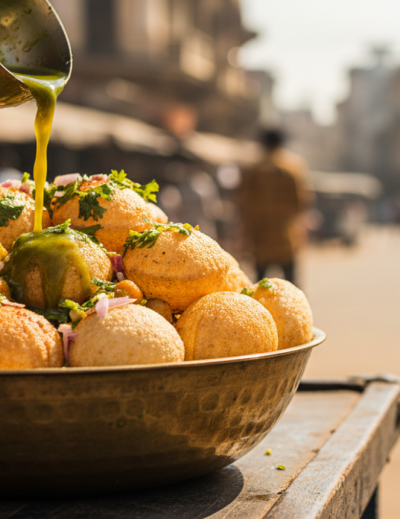
Balaram Mullick serves thick, creamy mishti doi and rosogolla across multiple outlets at ₹100–350. In winter, the nolen gur topping adds an extra layer of richness that is worth timing your visit around. After that, head to a street stall near New Market or Gariahat for puchka — six pieces for ₹20–40. It is sharp, tangy, and entirely addictive. Moreover, eating puchka standing on a Kolkata pavement is as essential as any restaurant on this list.
Evening (6–8pm) — Kathi Rolls and Beguni
Nizam’s in New Market invented the kathi roll, and the original is still the best — egg and mutton wrapped in a flaky paratha at ₹80–100. Furthermore, as the sun dips, look for evening street stalls selling beguni — crispy battered brinjal fritters finished with black salt, fried fresh and served piping hot at ₹20–30. Kalika Mukhorochak on College Street is the most reliable spot for these.
Nightcap — Firni at Shiraz Golden Restaurant
End your day at Shiraz Golden Restaurant in Mullickbazar with silky rice pudding, fragrant with cardamom and served chilled in an earthen bowl at ₹70–100. It is the perfect close to a full day of eating in Kolkata. Open until midnight.
Frequently Asked Questions About Eating in Kolkata
What is the most iconic food in Kolkata?
Kolkata biryani with potato, kathi rolls from Nizam’s, mishti doi, and puchka are the four things that define eating in Kolkata for most visitors. Additionally, rosogolla — which Kolkata claims as its own with some passion — is non-negotiable for anyone with a sweet tooth.
Is Kolkata street food safe to eat?
Generally yes, particularly at established stalls with high turnover. Moreover, the busier the stall, the fresher the food. Stick to cooked items, avoid pre-cut fruit, and carry hand sanitiser. Most visitors eat street food throughout their trip without any issues.
How much does a full day of eating in Kolkata cost?
Budget around ₹500–800 for a full day covering breakfast, chai, biryani lunch, sweets, puchka, a kathi roll, and a nightcap firni. Consequently, Kolkata is one of India’s best-value cities for food, even when eating well at every meal.
When is the best time to visit for food?
October to February. The cooler weather makes street food eating genuinely comfortable, and winter brings nolen gur — a seasonal date palm jaggery that transforms mishti doi, sandesh, and rasogolla into something extraordinary.
Pay as You Go with Mony
From morning luchis to midnight firni, eating in Kolkata feeds both your stomach and your soul. With Mony, you hop from stall to stall without fumbling for change. As a result, both hands stay free — exactly where they should be: holding food.





Leave a Reply