
So You Want to Experience an Indian Festival? Here’s Everything You Need to Know
If you want to experience Indian festivals as a tourist, you’ve made one of the best travel decisions possible. From streets drenched in colour to riverbanks glowing with thousands of oil lamps, India celebrates with a scale, joy, and sincerity that is unlike anything else in the world.
Fortunately, India celebrates hundreds of festivals every year, spanning religions, regions, and seasons. So no matter when you visit, a celebration is almost certainly happening somewhere nearby — and as a tourist, you are almost always welcome to join in.
Here, then, is your complete guide to experiencing Indian festivals as a tourist, along with practical tips on how to make the most of each one.
Holi — The Festival of Colours
When: March (full moon day) Best places to celebrate: Mathura, Vrindavan, Jaipur, Delhi, Mumbai
If you only ever attend one Indian festival, make it Holi. For one glorious day, the entire country erupts in coloured powder and water — strangers drench each other in pink, green, and yellow, and the usual rules of everyday life are gleefully suspended.
Holi marks the arrival of spring and the triumph of good over evil. The evening before, communities light Holika Dahan bonfires across India, before full colour play explodes the following morning.
Tips for Tourists
- Wear white clothes you don’t mind ruining — they become a canvas by the end of the day.
- Since water balloons are very much part of the fun, protect your phone in a waterproof pouch beforehand.
- Apply oil to your hair and skin before heading out, because it makes the colour much easier to wash off later.
- The celebrations in Mathura and Vrindavan are the most legendary and deeply traditional. As a result, accommodation fills up months in advance — so book as early as possible.
- Stay alert in large crowds and, whenever possible, stick with a group.
Diwali — The Festival of Lights
When: October or November (date changes yearly) Best places to celebrate: Varanasi, Jaipur, Amritsar, Udaipur, Mumbai
Diwali is India’s most beloved festival — a five-day celebration of light over darkness, knowledge over ignorance, and good over evil. Families line streets and homes with diyas (small oil lamps), fireworks paint the night sky, and everyone exchanges sweets and gifts throughout the festivities.
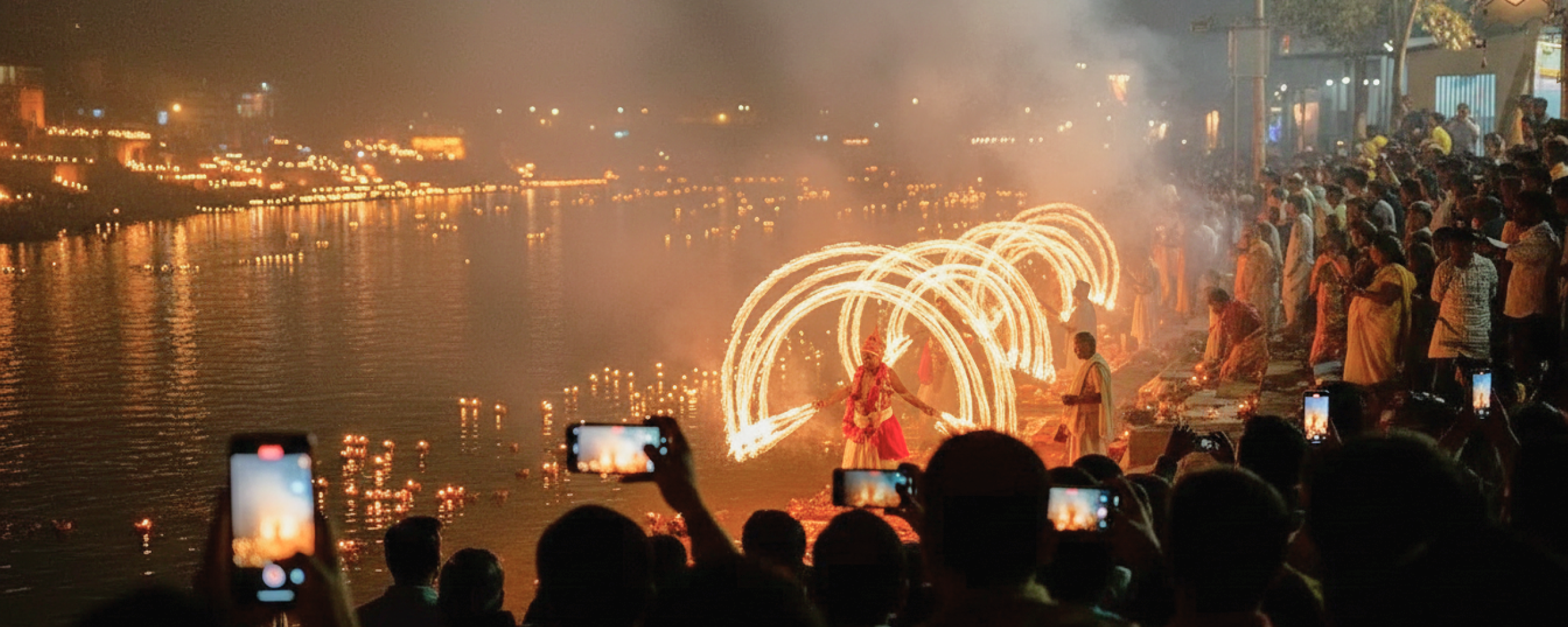
Although each region celebrates differently, the spirit remains the same everywhere. In Varanasi, devotees float thousands of diyas on the Ganges in a breathtaking ceremony. In Amritsar, the Golden Temple dazzles in spectacular illumination. In cities like Mumbai and Jaipur, meanwhile, the festivities spill into every street and market.
Tips for Tourists
- Book accommodation early, since Diwali is peak travel season across India and prices rise quickly.
- Try mithai (traditional Indian sweets) — because vendors offer them everywhere, and accepting is a warm gesture.
- Since the evenings are the main event, head to a riverside, rooftop, or open square after dark for the best views of the fireworks and lights.
- Although many shops and restaurants close on the main Diwali day, most hotels, restaurants, and tourist attractions accept UPI payments via Mony — making cashless celebrating easy even when banks close for the holiday.
Pushkar Camel Fair
When: November (date changes yearly) Best place to celebrate: Pushkar, Rajasthan
Technically a livestock trading fair, the Pushkar Camel Fair has grown into one of the most extraordinary cultural spectacles in the world. Over 50,000 camels, horses, and cattle descend on the desert town of Pushkar, alongside folk dancers, acrobats, musicians, and travellers from across the globe.
In addition to the livestock trading, the fair features camel races, turban-tying competitions, and folk performances at sunset. Furthermore, a sacred lake glows golden in the evening light, making it one of the most photogenic settings in all of Rajasthan.
Tips for Tourists
- Book well ahead, because accommodation in Pushkar is limited and fills up fast during the fair.
- The full moon night (Kartik Purnima) marks the spiritual peak of the festival. Consequently, the atmosphere reaches its most powerful and moving on this evening.
- Since Pushkar is a holy town, wear comfortable, modest clothing throughout your visit.
- Bargain freely at the craft stalls — Rajasthani textiles, jewellery, and leather goods here rank among the best in the country.
Ganesh Chaturthi
When: August or September (10-day festival) Best places to celebrate: Mumbai, Pune, Hyderabad
For ten days every year, Mumbai transforms completely. Communities install enormous, elaborately crafted statues of Lord Ganesha in homes, neighbourhoods, and public pandals (temporary shrines), before carrying them in massive processions to the sea in a finale called Visarjan — the immersion.
The Visarjan day in Mumbai ranks among the most electrifying spectacles in India. Hundreds of thousands of people line the streets and beaches, singing and dancing as Ganesha returns to the water. Because the energy builds over ten full days, the final procession feels especially charged and emotional.
Tips for Tourists
- The last day (Anant Chaturdashi) is when the big processions happen — make sure you don’t miss it.
- Head to Girgaon Chowpatty beach in Mumbai for the main immersion ceremony, since the largest idols arrive here.
- Arrive early to find a good spot, as crowds are enormous — though generally festive and safe throughout the day.
- Try the festival special: modak, a sweet dumpling that Lord Ganesha’s devotees consider his favourite food.
Hornbill Festival
When: December 1–10 Best place: Kisama Heritage Village, Nagaland
The Hornbill Festival in Nagaland celebrates the state’s indigenous Naga tribes — specifically, it showcases traditional music, dance, crafts, food, and sporting events that very few international tourists know about. Because it sits far off the typical tourist trail, it offers an authenticity that is increasingly rare.
Unlike many mainstream festivals, it feels raw, deeply cultural, and genuinely unlike anything else in India. If you are drawn to indigenous cultures and off-the-beaten-path experiences, this is consequently one of the most rewarding festivals on the subcontinent.
Tips for Tourists
- Nagaland requires an Inner Line Permit (ILP) for foreign nationals — apply in advance, since processing takes time.
- Fly into Dimapur and then take a shared taxi or bus onward to Kohima.
- Although the location is remote, the festival itself warmly welcomes tourists, with organised seating, clear signage, and food stalls throughout.
Quick Festival Calendar
| Festival | Month | Best Location |
|---|---|---|
| Pongal | January | Tamil Nadu |
| Holi | March | Mathura, Jaipur |
| Eid ul-Fitr | March/April | Hyderabad, Lucknow |
| Rath Yatra | June/July | Puri, Odisha |
| Ganesh Chaturthi | Aug/Sept | Mumbai, Pune |
| Navratri & Durga Puja | October | Kolkata, Gujarat |
| Pushkar Camel Fair | November | Pushkar, Rajasthan |
| Diwali | Oct/Nov | Varanasi, Amritsar |
| Hornbill Festival | December | Nagaland |
A Note on How to Experience Indian Festivals as a Tourist Respectfully
India’s festivals are almost always open to visitors, and locals genuinely love sharing them with curious travellers. Nevertheless, to truly experience Indian festivals as a tourist in the best possible way, a few things are worth keeping in mind.
First, always ask before photographing rituals or people in prayer — a smile and a gesture goes a long way. Additionally, dress modestly at religious events, even if the festival feels more like a party than a ceremony. Most importantly, participate with humility — join in the dancing, accept the sweets, get involved — but follow the lead of those around you at all times. Finally, keep a close eye on your belongings in large crowds, since pickpockets do operate at very busy events.
The more genuinely curious and respectful you are, the more warmly locals will welcome you. That much, at least, is guaranteed.
Planning your festival trip to India? Explore more travel guides at Mony Blogs, and travel cashless across India with Mony — UPI payments for tourists, made simple.

Leave a Reply