
Table of Contents
The Must try Biryanis in India extend far beyond the Hyderabadi and Lucknowi versions that appear most frequently in restaurants outside their home regions. Just as pasta changes as you travel across Italy, biryani changes dramatically as you cross Indian state borders. Short-grained rice replaces basmati. Fresh seafood replaces lamb. Green chillies replace whole dried spices. This guide covers five of the most distinctive Must try Biryanis in India with what makes each one specific and where to find the best versions.
Dindigul Biryani — Tamil Nadu’s Tangy Short-Grained Version
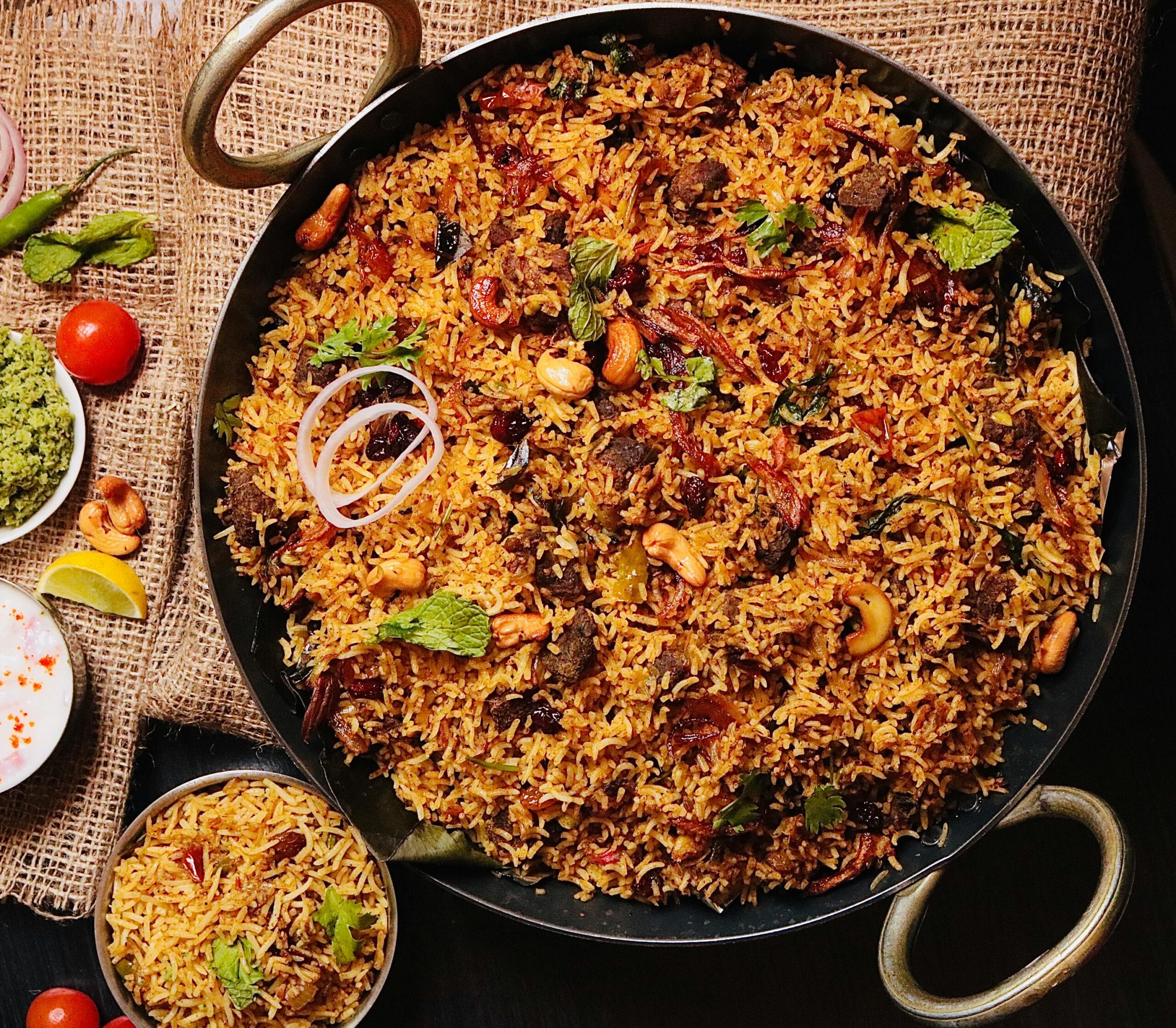
Dindigul Biryani from Tamil Nadu is the most texturally distinctive of the Must try Biryanis in India for visitors who have only eaten basmati-based versions. Cooks use seeraga samba — a short-grained rice that carries its own nutty aroma. It absorbs spices differently from basmati. The biryani combines local goat meat with pepper, green chillies, and curd. The result is tangy and peppery, sitting in direct contrast to the floral, ghee-rich Lucknowi style. The best versions come from restaurants in Dindigul itself. Several Chennai restaurants also serve credible versions. A plate costs Rs 150 to Rs 300.
Motiyan Biryani — Lucknow’s Gold-Leaf Royal Biryani
Motiyan Biryani from Lucknow is the most visually dramatic of the Must try Biryanis in India. Cooks mix chicken and lamb mince with aromatics and roll the mixture into meatballs. These layer with Awadhi spiced rice before cooking. The finishing touch is edible gold and silver leaf — a presentation referencing the Mughal court tradition of gilded food. The flavour is characteristically Lucknowi: aromatic, gentle, and refined rather than fiery. Specialist restaurants in Lucknow’s old city serve it at Rs 400 to Rs 700 per portion. Furthermore, ordering in advance is advisable as the preparation takes several hours.
Bhatkal Biryani — Karnataka’s Seafood Version Without Ghee
Bhatkal Biryani from the coastal Karnataka town of Bhatkal is the most unusual of the Must try Biryanis in India in terms of technique. Unlike most biryanis that rely on ghee and whole dried spices, Bhatkal Biryani uses no ghee or oil. Instead, cooks flavour the rice primarily with onions, green chillies, and garlic. Fresh seafood from the Karnataka coast replaces lamb. Some versions even substitute short vermicelli noodles for the rice entirely. Consequently, the result tastes completely different from any other biryani on this list. It rewards the curiosity of visitors who want to understand the full range of the category.
Bohri Biryani — Gujarat’s Yemeni-Influenced Version with Sour Plums
Bohri Biryani arrived in Gujarat with the Bohri Muslim community from Yemen in the 13th and 14th centuries. It is, consequently, one of the most historically layered of the Must try Biryanis in India. The spice profile adapts equally well to meat and seafood. Sour dried plums and crispy fried potato chunks appear alongside the rice. These additions produce sharp, contrasting flavours against the rich aromatic base. The best versions are available at Bohri community restaurants in Mumbai and Surat. A plate costs Rs 200 to Rs 450. Moreover, the dish varies noticeably between households, so trying multiple versions is worthwhile when you are in the area.
Guntur Biryani — Telangana’s Fiercely Spiced Version
Guntur Biryani from Guntur in Telangana is the spiciest of the Must try Biryanis in India. Cooks use boneless chicken, long-grained rice, and a spice mix built around Guntur red chillies. The heat is genuine and sustained rather than superficial. In contrast to Hyderabadi biryani, Guntur biryani remains a local favourite that most visitors to Telangana overlook. Restaurants in Guntur city serve it at Rs 150 to Rs 280 per plate. Additionally, several Hyderabad restaurants specialising in Andhra cuisine carry it on their menus as well.
Paying for Must try Biryanis in India
Most restaurants serving these Must try Biryanis in India accept cards and UPI. Street-level stalls and smaller regional eateries, however, work primarily in cash or basic UPI. For NRI visitors and international tourists, Mony makes every payment at every stop seamless. Specifically, Mony is a travel finance app that lets NRIs and tourists pay like locals using UPI. As a result, there are no foreign card fees and no declined payments at any restaurant on this list — from a coastal Bhatkal eatery in Karnataka to a Lucknow old city specialist.





Leave a Reply