
Eating Clean and Staying Calm: Discovering Sattvic Food in India
If you have only ever thought of India as the land of fiery curries and irresistible street food, then sattvic food in India offers a compelling counterpoint. Rooted in ancient Ayurvedic principles, sattvic cooking is built around fresh, seasonal ingredients prepared with intention. It calms the digestive system, supports natural nutrition, and suits India’s temperate-tropical climate remarkably well.
The word sattvic comes from the Sanskrit sattva, meaning purity, honesty, and vitality — qualities that are life-affirming by nature. Indian sages and yogis have followed sattvic principles for millennia. Today, however, the practice appeals to health and wellness communities around the world. One organisation that deserves considerable credit for spreading sattvic cuisine globally is ISKCON — the International Society for Krishna Consciousness. Through the Hare Krishna movement, simple and wholesome Indian meals reached temples and community kitchens on every continent.
What Makes a Food Sattvic
Sattvic cuisine follows the seasons closely. Fresh fruits and vegetables form its foundation. Meat, fish, and eggs are excluded entirely, as expected. However, some exclusions may surprise first-time visitors. Onions, garlic, mushrooms, aged cheeses, fermented foods, deep-fried preparations, and anything extremely spicy or acidic are all considered harmful to the body’s balance. According to Ayurvedic thought, these foods either agitate the mind or dull the senses.
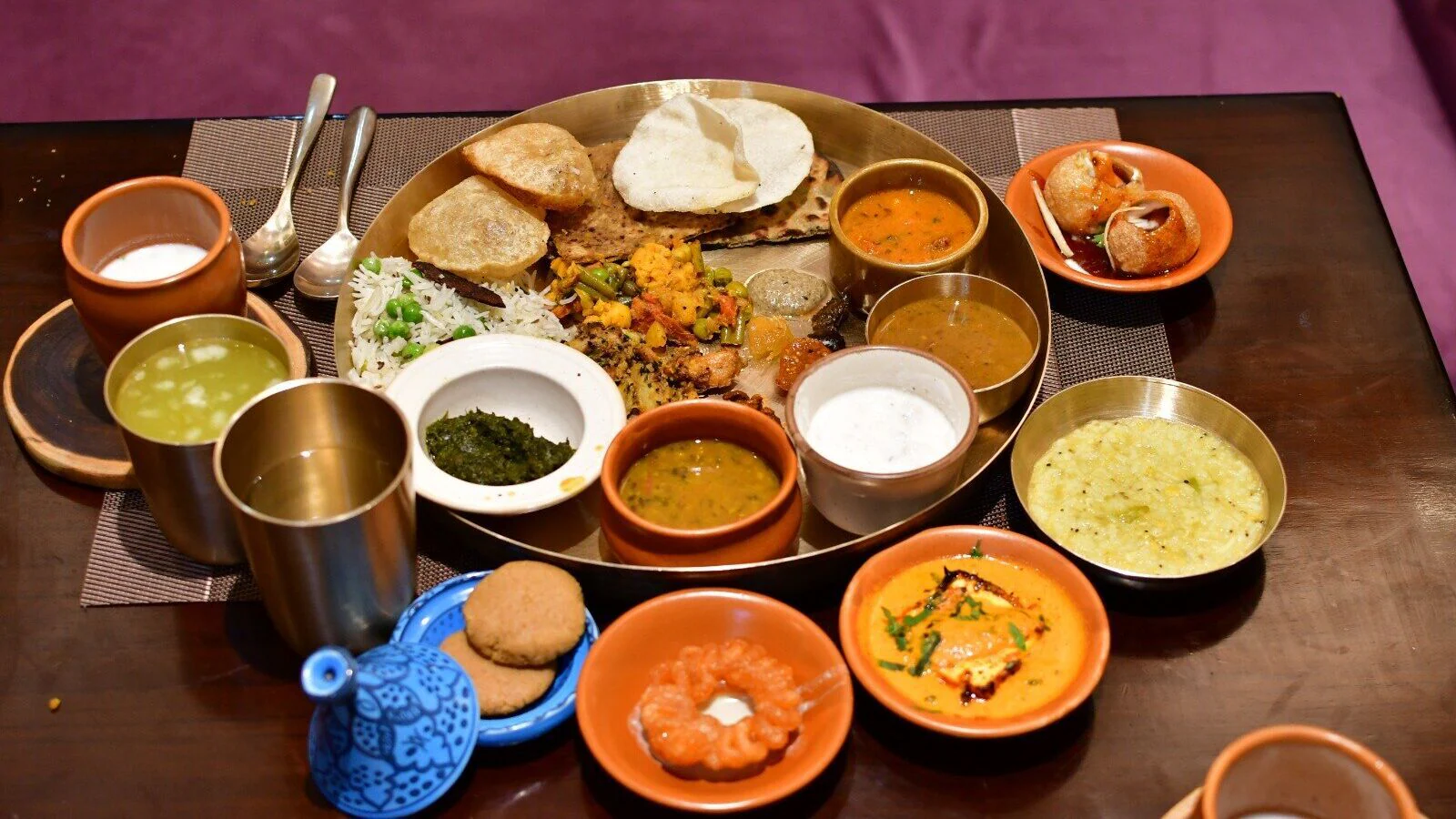
A typical sattvic meal, instead, might include whole-grain khichdi, a fresh paneer curry, seasonal vegetables, and payasam — a rice pudding sweetened with honey or jaggery. It is worth noting that sattvic food is vegetarian but not vegan, since dairy products like milk, ghee, and fresh paneer play a central role.
Where to Find Sattvic Food in India
Although India is broadly a vegetarian-friendly destination, authentic sattvic cooking is less common outside of specific religious or wellness contexts. Outside of festival seasons, you are most likely to find it in dedicated restaurant kitchens and spiritual towns. Three places stand out in particular: Rishikesh in Uttarakhand, Puri in Odisha, and Udupi in Karnataka. Each has a long tradition of plant-based, sattva-aligned cooking that predates the current wellness trend by centuries.
Govinda’s Restaurant — ISKCON Temples, Various Cities
ISKCON-run Govinda’s restaurants operate in nearly every major Indian city, including Delhi, Mumbai, Bengaluru, and Kolkata. They serve authentic sattvic thalis alongside some non-sattvic vegetarian options, and the food is consistently hygienic and fairly priced. A full thali typically costs between Rs 100 and Rs 200 depending on the city. Timings vary by location, but most open for lunch from 11:30 AM and for dinner from 7:00 PM. Check the ISKCON Delhi temple or your nearest branch for specific hours.
Sattvam — Bengaluru
Sattvam in Bengaluru takes a contemporary approach to sattvic cooking. Rather than replicating traditional temple food, it blends ancient principles with modern plating and technique. The result is a sattvic and vegan buffet that covers a wide range of dishes. The unlimited buffet is priced on the higher end — expect to pay around Rs 600 to Rs 900 per person — but the variety and quality justify the cost for those serious about the cuisine. The restaurant typically opens for lunch from noon and dinner from 7:00 PM.
Varr — Temple Food of India, Rishikesh
Varr in Rishikesh is an award-winning restaurant known for its artisanal approach to sattvic cooking. The menu draws from temple food traditions across different Indian states, presenting them with care and consistency. Rishikesh itself is one of the most natural places in India to explore sattvic food, given the town’s deep connection to yoga, Ayurveda, and spiritual practice. Most cafes and restaurants along the Laxman Jhula and Ram Jhula areas cater to a health-conscious crowd and offer sattvic or near-sattvic menus. Meals at mid-range restaurants here typically cost Rs 150 to Rs 400 per person.
Madhuban — Puri, Odisha
Puri is home to the Jagannath Temple, one of India’s most sacred sites and the source of mahaprasad — a large-scale sattvic meal cooked daily for thousands of devotees. The temple kitchen, known as Ananda Bazaar, is one of the largest in the world and uses no onion or garlic in any preparation. Receiving mahaprasad here is a genuine cultural and culinary experience. Outside the temple, restaurants like Madhuban serve Odishan vegetarian meals in a similar spirit. Expect to pay Rs 100 to Rs 250 for a full meal.
Getting Around: Practical Tips for Sattvic Food Travellers
Rishikesh is reachable by train to Haridwar Railway Station, followed by a 30-minute cab or bus ride. Cabs from Haridwar to Rishikesh cost approximately Rs 300 to Rs 500. Puri is well connected by train from Bhubaneswar, with taxis from Puri Railway Station into town costing Rs 100 to Rs 200. Bengaluru’s Sattvam is most easily reached via the city’s metro network — MG Road Metro Station is a useful starting point for navigating the city.
For NRI visitors and international travellers moving between these destinations, Mony makes day-to-day payments straightforward. Mony is a travel finance app that lets you pay like a local — using UPI, local cards, or cash — with no hidden fees and the best exchange rates. Whether you are paying for a thali at a Govinda’s outlet, booking a cab to Laxman Jhula, or picking up Ayurvedic herbs at a Rishikesh market, Mony keeps transactions simple and cost-efficient.
Why Sattvic Food in India Is Worth Seeking Out
Sattvic food in India is not a trend. It is a centuries-old practice that has quietly sustained communities of yogis, pilgrims, and temple communities across the subcontinent. For travellers arriving after months of processed food and irregular eating, a few days of sattvic meals can feel genuinely restorative. Moreover, it offers a side of Indian food culture that most tourists never encounter — calm, considered, and rooted in something much older than the restaurant industry.





Leave a Reply