
The must try dishes in Jaipur span centuries of Rajasthani culinary tradition — from slow-cooked mutton curries that trace their origins to royal hunting camps to street-side kachoris that locals have eaten for breakfast for generations. Unlike many Indian cities where the food scene has homogenised, Jaipur still serves dishes that are genuinely specific to Rajasthan. This guide covers the most worthwhile must try dishes in Jaipur with where to find them and what to pay.
Dal Baati Churma — The Quintessential Rajasthani Meal
Dal baati churma is the most iconic of all the must try dishes in Jaipur. Baati are hard wheat rolls baked over charcoal and then dipped in generous amounts of ghee. Spiced dal accompanies them, and sweet churma — crushed wheat with jaggery — completes the trio. Each element balances the others: richness from the ghee, heat from the dal, and sweetness from the churma. Laxmi Mishthan Bhandar (LMB) in Johari Bazaar is the most celebrated address for this dish. A full thali costs Rs 300 to Rs 450. Alternatively, Chokhi Dhani serves it as part of a full Rajasthani cultural evening for Rs 700 to Rs 1,200 per person.
Pyaaz Kachori — Jaipur’s Essential Breakfast
Pyaaz kachori is among the most specifically local of the must try dishes in Jaipur. Flaky, deep-fried pastry encases a filling of spiced onion and dried peas, and the kachori arrives hot from the fryer alongside tamarind chutney and a cup of chai. Rawat Mishthan Bhandar on Station Road is the most famous address for pyaaz kachori in the city. A kachori costs Rs 20 to Rs 30. The shop opens from approximately 6:00 AM and the freshest batches come out in the early morning, so arriving before 9:00 AM is advisable.
Laal Maas — Fiery Rajasthani Mutton Curry
Laal maas is the most celebrated meat dish among the must try dishes in Jaipur. Mutton slow-cooks in a gravy of Mathania dried red chillies, yogurt, and ghee until the fat separates and the meat becomes deeply tender. The heat level is serious — this is not a mild curry. Handi Restaurant on MI Road is the most consistently praised address for laal maas. A portion costs Rs 450 to Rs 700. The restaurant opens for lunch from noon and for dinner from 7:00 PM. Moreover, Spice Court in Civil Lines serves a reliable version in a heritage courtyard setting.
Jungle Maas — A Royal Hunting Recipe
Jungle maas originates from Rajput hunting traditions — a mutton preparation cooked simply with whole spices and minimal water, designed for preparation in the field rather than a palace kitchen. Unlike laal maas, it is earthier and less elaborately spiced, with the quality of the meat carrying the dish. Spice Court in Civil Lines is the most reliable address for jungle maas in Jaipur. A portion costs Rs 500 to Rs 800. Bajra roti, served alongside, is the traditional accompaniment.
Gatte ki Sabzi — Vegetarian Comfort Food
Gatte ki sabzi is one of the most comforting of the must try dishes in Jaipur for visitors who want to explore the vegetarian depth of Rajasthani cooking. Gram flour dumplings simmer in a tangy yogurt gravy seasoned with mustard seeds and dried red chillies. Most traditional thali restaurants across Jaipur include it as a standard component. Niros on MI Road and Chokhi Dhani both serve it as part of a full Rajasthani thali at Rs 300 to Rs 600 per person.
Ghewar — Jaipur’s Iconic Festival Dessert
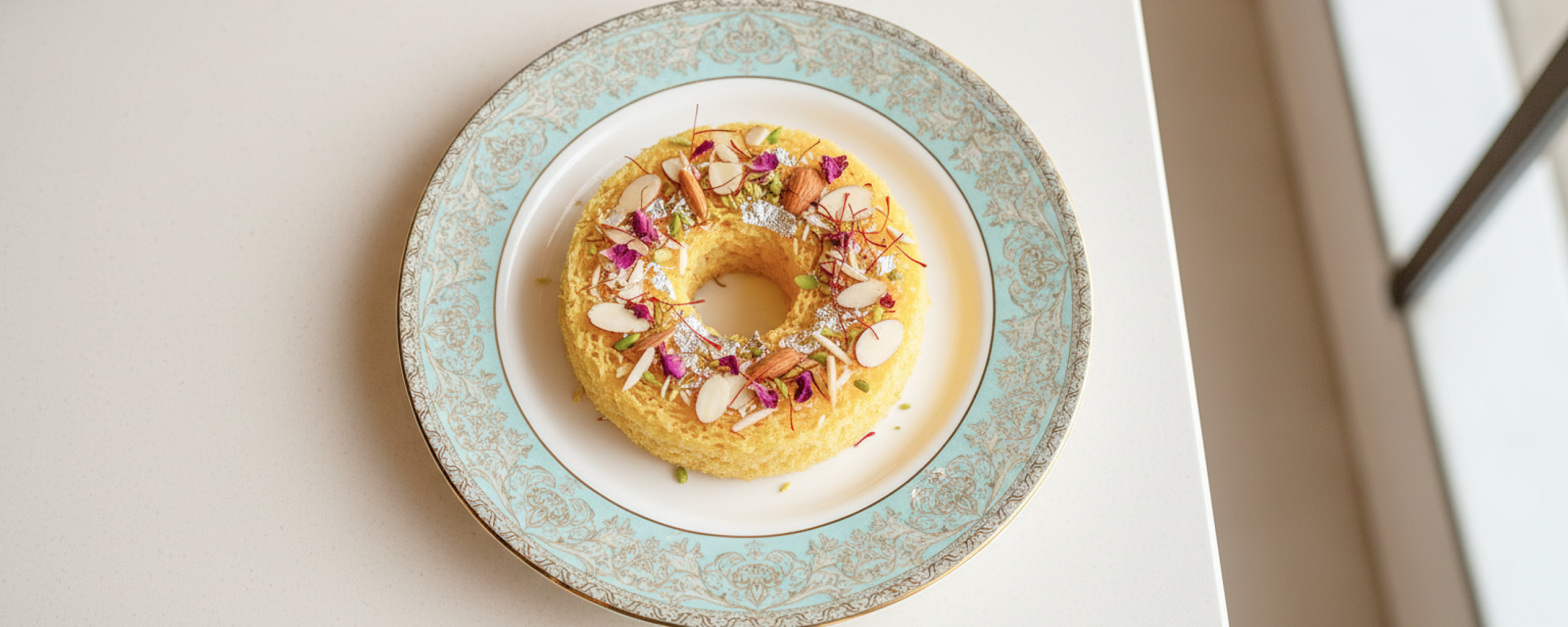
Ghewar is the most visually distinctive of the must try dishes in Jaipur and the city’s most celebrated sweet. A disc of flour batter fried in a cylindrical mould until it forms a honeycomb texture, then soaked in sugar syrup and topped with malai, saffron, or rabri. It appears year-round but peaks during festivals. LMB in Johari Bazaar and Sodhani Sweets are the two most reliable addresses. A portion costs Rs 80 to Rs 200 depending on size and topping.
Kulfi Falooda — The Essential Summer Treat
Kulfi falooda is the most refreshing of the must try dishes in Jaipur, particularly welcome during the hot months between March and June when temperatures routinely exceed 40 degrees. Dense, slow-frozen milk ice cream with rose syrup, falooda noodles, and dry fruits arrives in a single glass that handles the heat effectively. Stalls around Bapu Bazaar and Indian Ice Cream on MI Road both serve reliable versions at Rs 60 to Rs 120.
Paying for Food in Jaipur
Established restaurants like Handi, Niros, and Spice Court accept cards reliably. Street stalls, kachori vendors, and sweet shops like Rawat and Sodhani, however, work primarily in cash or UPI. For NRI visitors and international tourists working through the must try dishes in Jaipur, Mony makes every payment seamless. Mony is a travel finance app that lets NRIs and tourists pay like locals using UPI. As a result, there are no foreign card fees and no declined payments at street-level food stalls throughout Jaipur.






Leave a Reply