
Jaipur Travel Guide for International Tourists (2026)
Jaipur hits you with colour first. Pink sandstone walls catch the morning light, while saffron turbans weave through traffic below. Kites dot the sky above the old city. Then the sound arrives — horns, temple bells, a street vendor calling out “kachori garam hai!” Finally, the smell: cardamom chai drifting from a roadside stall, sandalwood from a temple doorway, and something frying in mustard oil that you’ll spend the rest of your trip trying to find again.
Rajasthan’s capital is one of India’s most visited cities for good reason. It packs more into a small area than almost anywhere else in the country: Mughal-era forts overlooking the city, palaces you can actually sleep in, bazaars that have been trading gems and textiles for centuries, and a street food scene that rivals Delhi’s.
This guide covers everything an international tourist needs to plan a trip to Jaipur in 2026 — what to see, where to eat, how to get around, what things cost, and how to pay. Crucially, Jaipur’s markets, monuments, and restaurants run on UPI and cash, not international credit cards. That’s a detail that changes your entire trip.
Jaipur at a Glance
| Detail | Info |
|---|---|
| Also known as | The Pink City |
| State | Rajasthan |
| Best time to visit | October – March (cool, dry, festival season) |
| Avoid | April – June (extreme heat, 40–45°C / 104–113°F) |
| Getting there | Jaipur International Airport (JAI) — direct flights from Delhi, Mumbai, Bangalore, Dubai, Bangkok, Singapore |
| From Delhi | 5–6 hours by road, 4.5 hours by train, 1 hour by flight |
| Languages | Hindi, Rajasthani, English (widely understood in tourist areas) |
| Currency | Indian Rupee (₹ / INR). ~₹84 = $1 USD |
| Payment | UPI (scan QR codes) accepted almost everywhere. Cards work at hotels and malls only. Cash useful for tips and bargaining. |
| Daily budget | Budget: ₹2,500–3,500 | Mid-range: ₹6,000–9,000 | Luxury: ₹15,000+ |
| How many days? | 2–3 days minimum, 4–5 if adding day trips to Pushkar or Ranthambore |
What to See in Jaipur
The Must-Visit Landmarks
Amber Fort (Amer Fort) — Jaipur’s crown jewel sits on a hillside 11 km north of the city. The scale is staggering: four levels of courtyards, the Sheesh Mahal (Hall of Mirrors), and panoramic views of Maota Lake below. Plan to spend 2–3 hours here. Entry costs ₹200 for foreigners (includes Jaigarh Fort), and arriving early is essential — by 9 AM the tour bus crowds arrive. The walk up is manageable, though jeeps are available for ₹500–1,000 return. UPI is accepted at the ticket counter.
Hawa Mahal (Palace of Winds) — The iconic pink honeycomb facade with 953 windows was designed to let royal women observe street life unseen. While the view from inside looking out is interesting, the real photo opportunity is from across the street. Grab a chai from one of the rooftop cafes opposite and shoot the full facade. Entry: ₹50 for foreigners.
City Palace — Still partially occupied by Jaipur’s royal family, the palace complex includes museums, courtyards, and the famous Peacock Gate. The textile and armoury galleries are surprisingly good, so allow 1.5–2 hours here. Entry: ₹500 for foreigners. An audio guide is also available.
Jantar Mantar — Home to the world’s largest stone sundial and a UNESCO World Heritage Site, the astronomical instruments here are genuinely impressive once you understand what they do. Hiring a guide (₹200–300) is therefore well worth it. Entry: ₹200 for foreigners. Since it sits right next to City Palace, combining both in one visit makes sense.
Nahargarh Fort — For the best sunset in Jaipur, head to Nahargarh. Perched on the Aravalli hills above the city, it offers panoramic views that are especially dramatic at golden hour. There’s a cafe at the top, and the winding drive up through the hills is part of the experience. Entry: ₹200 for foreigners.
Worth Your Time
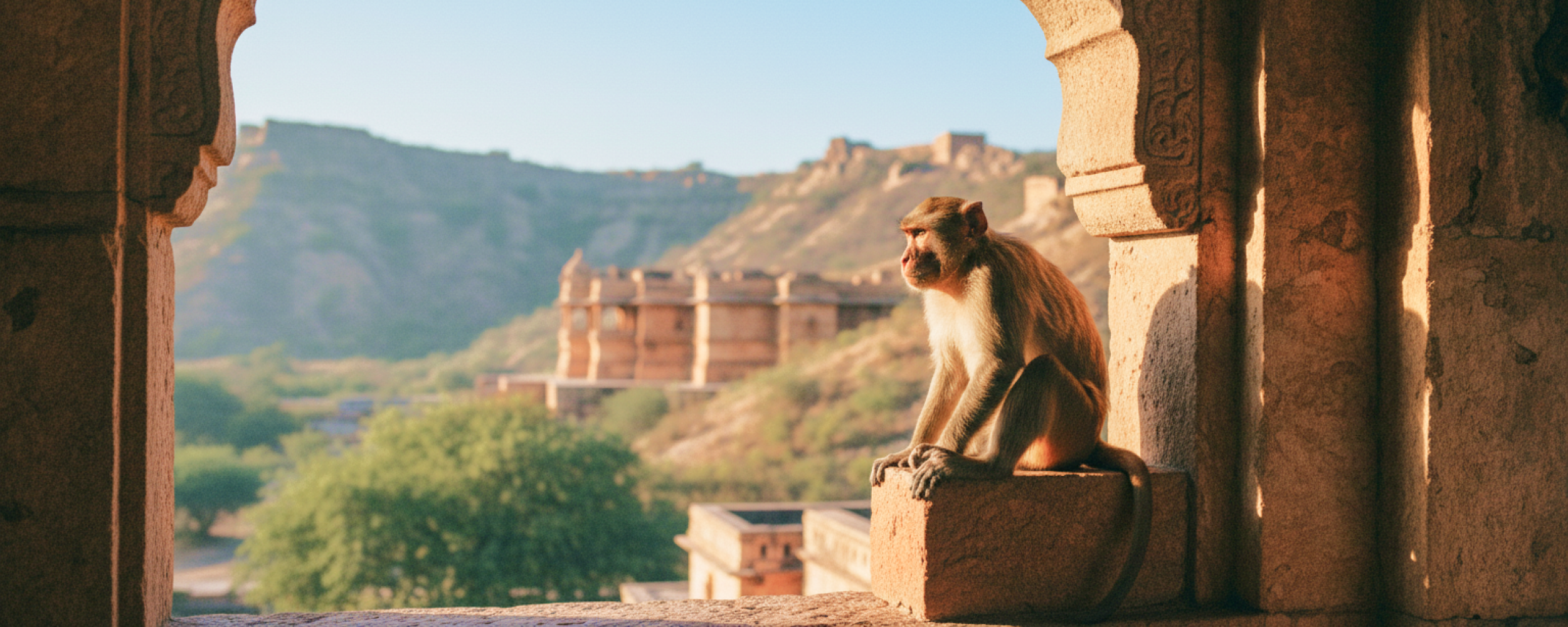
Galtaji (Monkey Temple) — An ancient pilgrimage site on Jaipur’s eastern edge, Galtaji features sacred water tanks, striking temple architecture, and yes, many monkeys. Morning visits are best. Entry is free, though donations are appreciated.
Albert Hall Museum — Rajasthan’s oldest museum is housed in a beautiful Indo-Saracenic building that’s worth seeing on its own. Inside, the Egyptian mummy and textile collections are particular highlights. Entry: ₹150 for foreigners. At night, the building is lit up beautifully.
Birla Mandir — A striking white marble temple at the base of Moti Dungri hill, Birla Mandir is modern (built in 1988) but architecturally interesting. Entry is free, and sunset is the ideal time to visit.
Jal Mahal — The “Water Palace” appears to float in Man Sagar Lake, and while you can’t go inside, the view from the roadside — especially at dusk — is stunning. It’s free to see, and worth a 15-minute stop on the way to or from Amber Fort.
Entry Fees at a Glance (2026)
| Attraction | Indian | Foreigner | UPI? |
|---|---|---|---|
| Amber Fort + Jaigarh | ₹50 | ₹200 | Yes |
| City Palace | ₹200 | ₹500 | Yes |
| Hawa Mahal | ₹20 | ₹50 | Yes |
| Jantar Mantar | ₹40 | ₹200 | Yes |
| Nahargarh Fort | ₹25 | ₹200 | Yes |
| Albert Hall Museum | ₹40 | ₹150 | Yes |
| Composite ticket (5 sites) | ₹300 | ₹1,000 | Yes |
Tip: The composite ticket covers Amber Fort, Hawa Mahal, Jantar Mantar, Nahargarh Fort, and Albert Hall Museum. It saves ₹300 over individual tickets and is available at any of the five sites. Ask for it at the first counter you visit.
Where to Eat in Jaipur
Jaipur’s food scene splits into two worlds: the old city street food that locals have eaten for generations, and the newer cafe and restaurant scene that has exploded in the last five years. Fortunately, both are worth your time.
For the full breakdown — street food stalls, restaurants by area, prices, and what to order — see our complete Where to Eat in Jaipur guide. Here’s the short version:
Must-Eat Street Food
Start your mornings with pyaaz kachori at Rawat Mishthan Bhandar, the city’s most famous breakfast spot. From there, head to Lassiwala on MI Road for lassi (always the original, not the copies next door). For a proper sit-down meal, dal bati churma at LMB (Laxmi Misthan Bhandar) in Johari Bazaar is essential, and kulfi at Pandit Kulfi near Hawa Mahal makes for a perfect afternoon stop.
Best Restaurants for Tourists
For a splurge, 1135 AD inside Amber Fort is hard to beat — expect to pay ₹2,500–4,000 per person for Rajasthani royal cuisine with fort views. Alternatively, Suvarna Mahal at Rambagh Palace delivers the full maharaja experience. Meanwhile, Bar Palladio offers a surprising but excellent Italian menu in a Mughal-style garden, and Tapri Central is the go-to spot for rooftop chai with a view.
Budget Eats
Eating well in Jaipur doesn’t have to be expensive. A full meal at a local thali restaurant costs just ₹100–200, and street food snacks run ₹20–80 each. In fact, you can eat extraordinarily well for under ₹500 a day.
Shopping in Jaipur
Jaipur is one of the best shopping cities in India. The bazaars around the old city have been trading gems, textiles, and handicrafts for centuries, and the quality-to-price ratio is hard to beat anywhere in the country.
The Key Bazaars
Johari Bazaar — This is Jaipur’s jewellery bazaar, home to gems, silver, and intricate kundan and meenakari work. As the gemstone capital of India, Jaipur is the best place in the country to buy jewellery. Expect to bargain, and start at 40–50% of the asking price.
Bapu Bazaar — Head here for textiles, leather juttis (embroidered shoes), and block-print fabrics. In addition to Rajasthani quilts and scarves, the juttiwalas here carry better variety than anywhere else in the city.
Tripolia Bazaar — For lac bangles, brassware, and traditional Rajasthani handicrafts, Tripolia is unmissable. The lac bangle makers work with open flames right in the shop, and it’s mesmerising to watch.
Hawa Mahal Bazaar — Sitting directly opposite the palace, this bazaar specialises in miniature paintings, blue pottery, and textiles. Prices are slightly higher than elsewhere due to the tourist footfall, but the setting is hard to beat.
How Payment Works in Jaipur’s Markets
Virtually every shop and stall in Jaipur’s bazaars now has a UPI QR code. Even the smallest bangle seller will typically have one taped to the counter. This is actually an advantage when bargaining — you agree on a price and pay instantly via UPI with Mony, with no fumbling for change or worrying about counterfeit notes.
International credit cards are rarely accepted in the bazaars. A few larger jewellery shops have card machines, but they will often add a 2% surcharge. Cash works everywhere, though UPI is faster and cleaner.
For our complete bazaar-by-bazaar breakdown with specific shops, prices, and bargaining tips, see the Jaipur Shopping Guide (coming soon).
Getting Around Jaipur
Auto-rickshaws — The default transport in Jaipur, auto-rickshaws are everywhere. Always agree on a price before getting in, or insist on the meter (most drivers will try to quote a flat rate). Typical fares run ₹30–50 for short hops in the old city, and ₹150–250 to Amber Fort from the city centre. Most drivers accept UPI — ask “UPI chalega?” before getting in.
Uber and Ola — Both apps work well in Jaipur, with transparent fares that are usually cheaper than negotiating with an auto. UPI works as payment in both, making them ideal for airport transfers and longer distances.
City bus — Jaipur’s JCTSL buses connect all major tourist sites. The “Heritage on Wheels” tourist bus, in particular, does a loop of the main attractions for ₹300/day — a useful option if you want a structured overview on your first day.
Rental scooter — Available for ₹300–500/day, scooters are great for reaching Nahargarh Fort independently. Jaipur traffic is intense but manageable if you’re comfortable with Indian driving. Note that an international driving permit is technically required.
Walking — The old city rewards those who explore on foot. Hawa Mahal, City Palace, Jantar Mantar, and Johari Bazaar are all within a 15-minute walk of each other. Wear comfortable shoes and carry water, as it gets hot quickly.
Money & Payments in Jaipur
This is the section that will save you the most frustration. Jaipur is a highly digital city when it comes to payments. QR codes appear everywhere — at fort ticket counters, street food stalls, rickshaw dashboards, gem shops, and even temple donation boxes.
What Works
- UPI via Mony — Works at 90%+ of places you’ll visit as a tourist. Simply scan the merchant’s QR code, enter your PIN, and you’re done. There are zero transaction fees, making it your primary payment method.
- Cash — Still useful for tipping guides, drivers, and hotel staff, as well as for bargaining at markets where flashing notes helps with negotiation. Keep some on hand for the rare vendor without a QR code.
- International cards — Accepted at upscale hotels (Rambagh Palace, Taj, ITC), shopping malls (World Trade Park), and a handful of high-end restaurants. Beyond that, however, don’t rely on them.
What Doesn’t Work
Apple Pay, Google Pay (which requires an Indian bank account), Amex (very limited acceptance), and most international debit cards are not accepted at local shops.
Our Recommendation
Set up Mony before you fly. Load ₹10,000–15,000 to start, and carry ₹2,000–3,000 cash as backup. Bring a Visa or Mastercard for your hotel bill. Together, that combination covers everything you’ll need.
For the full payment breakdown, see How to Pay in India as a Tourist.
Practical Tips for Visiting Jaipur
Weather & What to Pack
October–February is peak season, with warm days (20–28°C) and cool nights (5–15°C), so bring layers. March begins to warm up, while April–June is brutal at 40°C+. July–September brings the monsoon: dramatic skies and fewer crowds, though some sites may close temporarily.
When packing, prioritise comfortable walking shoes, sunscreen, and a scarf or shawl for temple visits (required for both men and women). A reusable water bottle and power bank are also essential, since you’ll use your phone constantly for UPI payments, maps, and photos.
Safety
Jaipur is generally safe for tourists. The main annoyances are gem shop touts (politely decline) and overenthusiastic “guides” who appear at monuments. Always use licensed guides from the ticket office, and keep valuables in a money belt in crowded bazaars. Solo female travellers should exercise normal caution at night, but will generally find Jaipur welcoming and easy to navigate during the day.
Connectivity
On arrival, pick up a local SIM card at the airport (Airtel or Jio, ₹200–500 for a tourist plan with data). You’ll need it for Uber, maps, and as a backup in case your international roaming drops. Wi-Fi at hotels is generally reliable.
Scams to Know
The “my uncle’s shop” gem scam: Friendly locals steer you toward specific jewellery shops where they earn a commission. Prices are inflated and the gems may not be what they claim. If you want to buy gems, stick to established dealers and always ask for certification.
The “closed today” scam: Someone near a monument tells you it’s closed and offers to take you somewhere else instead — usually a shop. In almost every case, the site is open. Walk to the entrance and check for yourself before going anywhere.
Suggested Itinerary: 2 Days in Jaipur
For the detailed hour-by-hour version with costs, see our full 2-Day Jaipur Itinerary.
Day 1: Forts, Palaces & the Old City
Start early at Amber Fort (arrive by 8:30 AM, spend 2–3 hours), then stop at Jal Mahal for photos on the drive back. Next, combine City Palace and Jantar Mantar into one visit (allow 2–2.5 hours), and have lunch at LMB in Johari Bazaar. In the afternoon, walk through Hawa Mahal Bazaar and Bapu Bazaar. Finally, as the day winds down, drive up to Nahargarh Fort for sunset and chai at the hilltop cafe.
Day 2: Food, Crafts & Culture
Begin with breakfast at Rawat Mishthan Bhandar (pyaaz kachori), then visit either Birla Mandir or Albert Hall Museum. Late morning is ideal for a block printing or pottery workshop. After lunch at Bar Palladio or Tapri Central, spend the afternoon exploring Johari Bazaar for jewellery and Tripolia Bazaar for bangles. In the evening, head to Chokhi Dhani for a Rajasthani cultural dinner, or opt for rooftop dining at a heritage hotel.
Pay Like a Local in Jaipur
Jaipur’s forts, food stalls, and bazaars all run on UPI. With Mony, you pay the same way 1.4 billion Indians do — scan a QR code and you’re done. No fumbling for change at the kachori stall, no card rejection at the bangle shop, and no losing 5% to forex fees.
Download Mony before you fly. Set it up in the departure lounge and load your wallet. By the time you step off the plane in Jaipur, you’ll be ready to pay at the taxi stand, the chai stall, and everywhere in between.


Leave a Reply