
The Ultimate Shopping Guide to Pondicherry: Boutiques, Bazaars & Everything in Between
Everyone lands in Pondicherry with the same shortlist — the Auroville store, the promenade, maybe a saree shop on Nehru Street. And honestly? Those are all great. But if your first trip to Pondy is going to be one you actually talk about for years, you need to go a little deeper.
Tucked behind colonial facades and down unmarked side lanes, there’s a whole other layer of shopping here. These are the spots locals know and long-term expats guard jealously. Most first-time visitors walk straight past them. Until now.
Here’s your insider guide to shopping in Pondicherry beyond the obvious.
Why First-Timers Miss the Best Shops
It’s not your fault — Pondicherry is genuinely easy to misread. The most photogenic streets lead naturally to the most well-known stores. With only a few days in the city, it’s tempting to stick to what’s visible. Beyond that, some of the best shops here have zero social media presence and no English signage. That quiet confidence is exactly what makes them worth finding.
Fortunately, getting around Pondicherry is simple. The city is compact and walkable. Once you step even one block off the main drags, the hidden gems start revealing themselves.
Hidden Shops in the French Quarter Worth Seeking Out
Geethanjali Handloom
Most visitors browsing the French Quarter gravitate toward bigger, better-signposted boutiques. Consequently, they walk right past Geethanjali. Tucked into a quiet stretch near Suffren Street, this small handloom store stocks some of the most beautiful naturally dyed cotton fabric in the city. The owner sources directly from weavers in Tamil Nadu’s interior villages. The selection also rotates constantly depending on what’s come in that week.
Prices are refreshingly honest. The owner will happily explain the dyeing process behind each fabric if you show any curiosity. Payment is flexible here — cash works perfectly, though many independent shops like this one now accept UPI QR codes. Having a way to pay digitally, like Mony, saves you from hunting down an ATM mid-browse.
The Courtyard Collective
This one requires a little detective work to find. Look for an unmarked wooden door on Dumas Street with a small potted fern beside it. Push it open and you’ll find a shared creative space where three independent makers sell from adjacent studio-shops: a ceramicist, a jewellery designer, and a textile artist. None of them advertise heavily, and all three produce genuinely original work.
Pieces here aren’t cheap, but they’re fairly priced for what they are — one-of-a-kind objects, often made in the very room you’re standing in. It’s the kind of place where you spend more than you planned and feel completely fine about it.
Librairie Kailash
Technically a bookshop — but don’t let that put you off. Librairie Kailash stocks a remarkable selection of titles on Indian art, architecture, and history. Many are out of print and hard to find elsewhere. Alongside the books, a small section carries vintage postcards, antique maps of the Coromandel Coast, and hand-lettered art prints. These make for some of the most thoughtful souvenirs you can bring home from Pondicherry. Both cash and UPI are accepted here.
Tamil Quarter Finds That Tourists Rarely Discover
Brass & Beyond, Vysial Street
The Tamil Quarter sits west of the canal, and Vysial Street is one of its most rewarding stretches for curious shoppers. Amid the hardware stores and vegetable vendors, a small brass-ware shop has operated for decades. A family runs it — one that has cast traditional lamps, figurines, and ritual objects for three generations.
Nothing here is made for tourists. The stock changes with the seasons and festivals, so what you find in January looks completely different from what’s on the shelves in October. Bargaining is gentle and good-natured. Once you agree on a price, most vendors here accept UPI, which makes the transaction easy on both sides. If you want to pay the way locals do in India, this is exactly the kind of neighbourhood where it makes a real difference.
The Kalamkari Corner
Down a lane off Mission Street, a workshop-cum-shop sells hand-painted Kalamkari fabric. Artists use natural dyes and a bamboo pen to create intricate narrative scenes on cotton. The pieces range from small decorative panels to full saree lengths. Watching the artist at work, when the workshop is in session, is worth the visit alone.
Because Kalamkari is time-intensive, prices reflect the craft honestly. Still, compared to what these pieces cost in Delhi or Mumbai boutiques, you’re getting remarkable value. The shop owner accepts both cash and digital payments. And as paying in India as a tourist gets easier with the right tools, there’s really no reason to worry about having exact change.
Auroville’s Lesser-Known Outlets (Beyond the Main Store)
Wellpaper
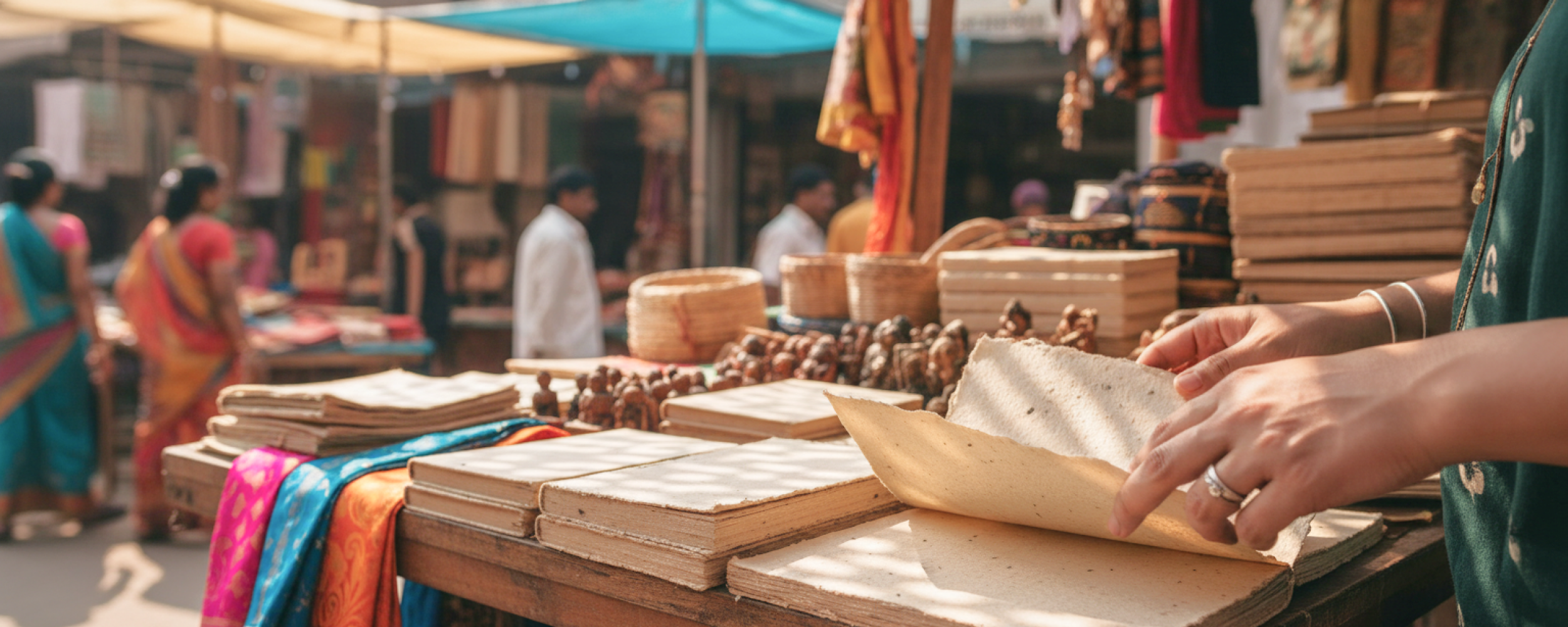
Everyone visits the main Auroville boutique, but far fewer make it to Wellpaper. This small workshop near the Auroville campus produces handmade recycled paper products — notebooks, lampshades, greeting cards, and wrapping paper, all crafted from repurposed materials. Because it attaches to a working studio rather than a retail complex, the atmosphere feels more personal. Prices are also a touch lower than the main outlets.
Getting here requires either a short auto-rickshaw ride from the city or a bicycle if you’re feeling adventurous. Both are very much part of the Auroville experience.
Tanto
Tanto is Auroville’s best-kept fashion secret. A small clothing label runs out of a studio on the campus. It produces clean-lined, sustainably made garments that sit somewhere between Indian handloom and Scandinavian minimalism. The sizing is inclusive, the fabrics are excellent quality, and the whole collection reflects Auroville’s characteristic attention to ethics and craft. Stock is limited and changes seasonally, so treat whatever you find as a happy accident rather than a guaranteed find.
Street-Level Secrets: Vendors Worth Stopping For
The Flower Jewellery Maker, Near Goubert Market
Every morning, just outside Goubert Market, an elderly woman sets up a small mat and spends the day crafting traditional South Indian flower jewellery. She weaves jasmine and marigold into hair ornaments and garlands. It’s not the kind of thing that survives the journey home, but wearing one for a day is one of those quintessentially Pondicherry experiences that no boutique can replicate. Prices are purely nominal, and the moment is priceless.
The Block Printer’s Stall, Romain Rolland Street
On weekday mornings, a block printer sets up a makeshift stall near the southern end of Romain Rolland Street. He brings a rotating selection of fabric offcuts, table runners, and small printed panels — all hand-stamped using carved wooden blocks. Because this is a personal stall rather than a shop, cash works best here. It’s a good reminder to always carry a little alongside your digital options. As we cover in our guide on how to travel and pay like a local, a hybrid approach works best in cities like Pondy.
How to Navigate Hidden Shops Like a Pro
Slow Down and Wander Deliberately
The biggest mistake first-time visitors make is trying to cover too much ground too quickly. Pondicherry’s hidden gems don’t advertise themselves — instead, they reward the person who takes a wrong turn and peeks through an open gate. Build unscheduled time into your days and treat it as part of the adventure.
Talk to Your Guesthouse
French Quarter guesthouses tend to be run by people who’ve spent years building local relationships. So ask your host for personal recommendations — not the tourist board list, but the places they actually go. The answers are almost always more interesting than anything you’ll find in a travel article (present company notwithstanding).
Pay Smart, Stay Flexible
As you wander further off the beaten path, payment options become less predictable. High-end boutiques and Auroville outlets are very comfortable with digital payments and UPI. Smaller workshops and street vendors, on the other hand, lean toward cash. The smartest approach is to carry both. Mony makes it easy for first-time visitors to tap into India’s UPI system without the usual friction, so you’re always ready whichever way a vendor prefers.
Go Find Your Pondicherry
The shops on this list don’t have loyalty programmes or Instagram pages. Several of them might not even be there the next time someone writes a guide like this one. That’s precisely what makes finding them feel like such a personal victory.
So go wander. Take the lane you weren’t planning to take. Say yes to the courtyard. Ask what’s behind the curtain. First-time or not, that’s the version of Pondicherry shopping that stays with you long after the suitcase is unpacked.









Leave a Reply