
Chennai Travel Guide for International Tourists (2026)
Table of Contents
This chennai travel guide covers everything international visitors need to plan a trip to South India’s cultural and culinary powerhouse. Chennai is where Carnatic music fills temple corridors, where Marina Beach stretches 13 kilometres along the Bay of Bengal, where filter coffee is an art form, and where the food — dosas, idlis, Chettinad curries, and fresh seafood — represents some of the best eating in India. This chennai travel guide covers sights, food, transport, and practical logistics for a first visit.
Chennai at a Glance
The best time to visit according to this chennai travel guide is November to February. The weather is cooler and drier, and the period coincides with Chennai‘s classical music and dance festival season. Avoid April to June for extreme heat above 40°C. Chennai International Airport (MAA) operates direct flights from Singapore, Dubai, London, Kuala Lumpur, and Colombo. A pre-paid cab from the airport to the city centre costs Rs 400 to Rs 600. Two to three days covers the main sights in this chennai travel guide. Adding one to two more days allows a comfortable Mahabalipuram day trip.
What to See in Chennai
Marina Beach
Marina Beach is the most iconic single landmark in this chennai travel guide. At 13 kilometres, it is the world’s second-longest urban beach. Swimming is not advised due to strong currents, but early morning walks between 6:00 AM and 8:00 AM are the most pleasant time to visit. Evening street food vendors arrive from approximately 5:00 PM selling sundal, bhajji, and roasted corn at Rs 20 to Rs 60. Entry is free. The fish market at the northern end is worth a visit for its morning activity between 5:00 AM and 8:00 AM.
Kapaleeshwarar Temple
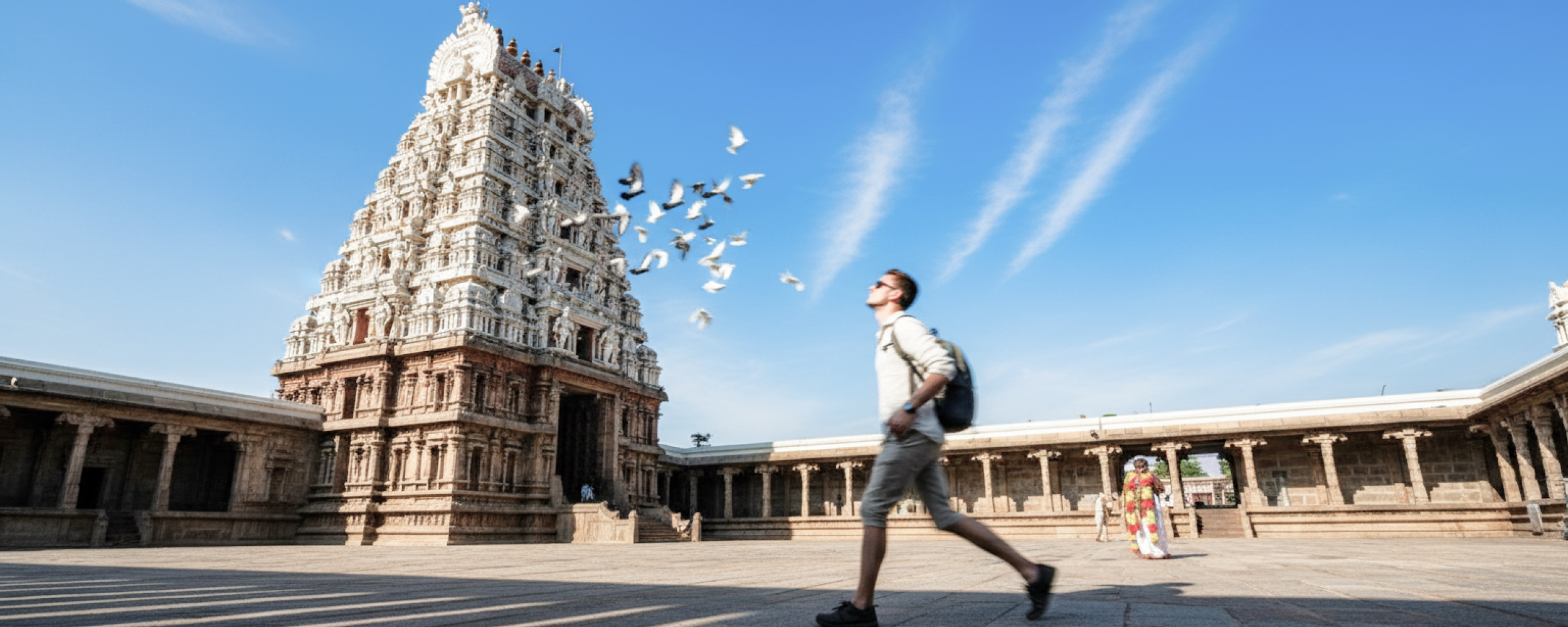
Kapaleeshwarar Temple in Mylapore is the most architecturally significant of the Hindu sites in this chennai travel guide. The 7th-century Dravidian temple carries a gopuram (tower) covered in colourful sculpted figures across every surface. The surrounding Mylapore neighbourhood is the cultural heart of Chennai — flower markets, traditional tiffin stalls, and music practice from nearby residences define the area in the morning. Entry is free. Remove footwear before entering. The temple is most atmospheric during the early morning puja between 6:00 AM and 8:00 AM.
San Thome Cathedral
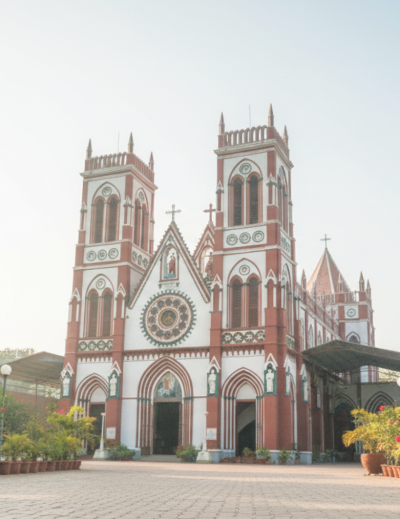
San Thome Cathedral on San Thome High Road is one of only three churches in the world built over an apostle’s tomb — that of St. Thomas, who is believed to have travelled to South India in the first century AD. Entry is free. Allow 30 minutes. The cathedral opens daily from 6:00 AM to 8:00 PM. It is additionally worth combining with the nearby Mylapore area on the same morning.
Fort St. George
Fort St. George in the city centre is the most historically significant colonial site in this chennai travel guide. Built in 1644, it was the first British fortress in India and now houses the Tamil Nadu Legislative Assembly alongside a museum of colonial-era artefacts. Entry costs Rs 25. The museum opens Tuesday to Sunday from 9:00 AM to 5:00 PM. Allow one hour. The nearest metro station is Chennai Central Metro Station.
Government Museum
Government Museum in Egmore is the most culturally essential museum stop in this chennai travel guide. The bronze gallery, featuring Chola-era sculpture, is among the finest collections of its kind in India. Entry costs Rs 25 for Indian nationals and Rs 250 for foreign visitors. The museum opens Tuesday to Sunday from 9:30 AM to 5:00 PM. Allow 1.5 hours. The nearest metro station is Egmore Metro Station.
Mahabalipuram — Day Trip from Chennai
Mahabalipuram, approximately one hour south of Chennai, is the most impressive archaeological day trip in this chennai travel guide. The UNESCO-listed site carries Shore Temples, rock-cut caves, and Arjuna’s Penance — a massive 7th-century bas-relief carved directly into a granite boulder face. Entry costs Rs 40 for Indian nationals and Rs 600 for foreign visitors. A cab from Chennai costs Rs 800 to Rs 1,200 one way. Combining with DakshinaChitra — an open-air heritage museum 25 kilometres south of Chennai at Rs 150 to Rs 250 entry — makes a practical full-day trip.
Where to Eat in Chennai
The essential eating stops in this chennai travel guide include filter coffee and tiffin at Saravana Bhavan at Rs 80 to Rs 150. Idlis at Murugan Idli Shop cost Rs 60 to Rs 100. Chettinad cuisine at Anjappar costs Rs 200 to Rs 400 per person. Marina Beach seafood stalls run Rs 100 to Rs 200 per plate. Fine dining at Avartana at ITC Grand Chola costs Rs 3,000 to Rs 5,000 per person. Furthermore, the Mylapore neighbourhood carries the highest concentration of traditional tiffin addresses in the city for visitors who want to eat where locals eat.
Getting Around Chennai
Chennai Metro covers the central and southern corridors — fares run Rs 10 to Rs 60 depending on distance. Uber and Ola operate throughout the city at Rs 80 to Rs 300 per journey. Auto-rickshaws suit shorter distances and negotiate by meter or app. Local suburban trains connect the city to Mahabalipuram and other southern destinations at Rs 10 to Rs 30.
Paying in Chennai
UPI is widely accepted across Chennai — temple areas, beach stalls, restaurants, and auto-rickshaws all carry QR codes. Cards work reliably at hotels, malls, and established restaurants. For NRI visitors and international tourists using this chennai travel guide, Mony makes every payment throughout the city seamless. Mony is a travel finance app that lets NRIs and tourists pay like locals using UPI. As a result, there are no foreign card fees and no declined payments at any address across this chennai travel guide itinerary.
“` ===END 1===



Leave a Reply