
Must-See Places in Rishikesh: A Complete Travel Guide
Table of Contents
Rishikesh sits in the foothills of the Himalayas along the banks of the Ganges and manages to be several things at once — a pilgrimage town, a yoga centre, an adventure sports hub, and a gateway to the higher Himalayas. The places to visit in Rishikesh reflect all of these identities, which is part of what makes the town so consistently rewarding for visitors arriving from very different directions. This guide covers the essential stops with practical information for each.
Lakshman Jhula and Ram Jhula — The Town’s Most Iconic Bridges
Lakshman Jhula and Ram Jhula are the two suspension bridges that cross the Ganges in central Rishikesh and function as the town’s most recognisable landmarks. Both bridges connect the eastern and western banks and are lined with temples, ashrams, and small shops on both sides. Crossing either bridge on foot takes a few minutes but the experience of standing above the river with the Himalayan foothills visible upstream tends to slow most visitors down considerably. Entry is free. The bridges are most atmospheric in the early morning before the crowds build, and again at dusk. Ram Jhula is slightly wider and less crowded than Lakshman Jhula on most days.
Triveni Ghat — Evening Ganga Aarti
Triveni Ghat is the main bathing ghat in Rishikesh and the site of the evening Ganga Aarti — a fire ritual performed by priests using large oil lamps, accompanied by devotional songs and attended by pilgrims, locals, and visitors in approximately equal numbers. The ceremony takes place daily at sunset, typically around 6:00 PM to 7:00 PM depending on the season. Entry is free. Arriving 20 to 30 minutes early secures a good vantage point. The ghat is one of the most genuinely moving of the places to visit in Rishikesh, particularly for first-time visitors to India who have not previously witnessed a large-scale aarti.
Parmarth Niketan Ashram — Yoga and Meditation
Parmarth Niketan Ashram is one of the largest ashrams in Rishikesh and sits directly on the Ganges bank near Ram Jhula. It offers daily yoga classes, meditation sessions, and spiritual programmes that are open to visitors as well as residential guests. The ashram also hosts the annual International Yoga Festival each March, which draws practitioners from across the world. The gardens are well maintained and the riverfront location is among the most serene in the town. Day visitors can attend the evening aarti held at the ashram’s own ghat. Entry for day visits is generally free, though donations are welcome.
The Beatles Ashram — History and Street Art
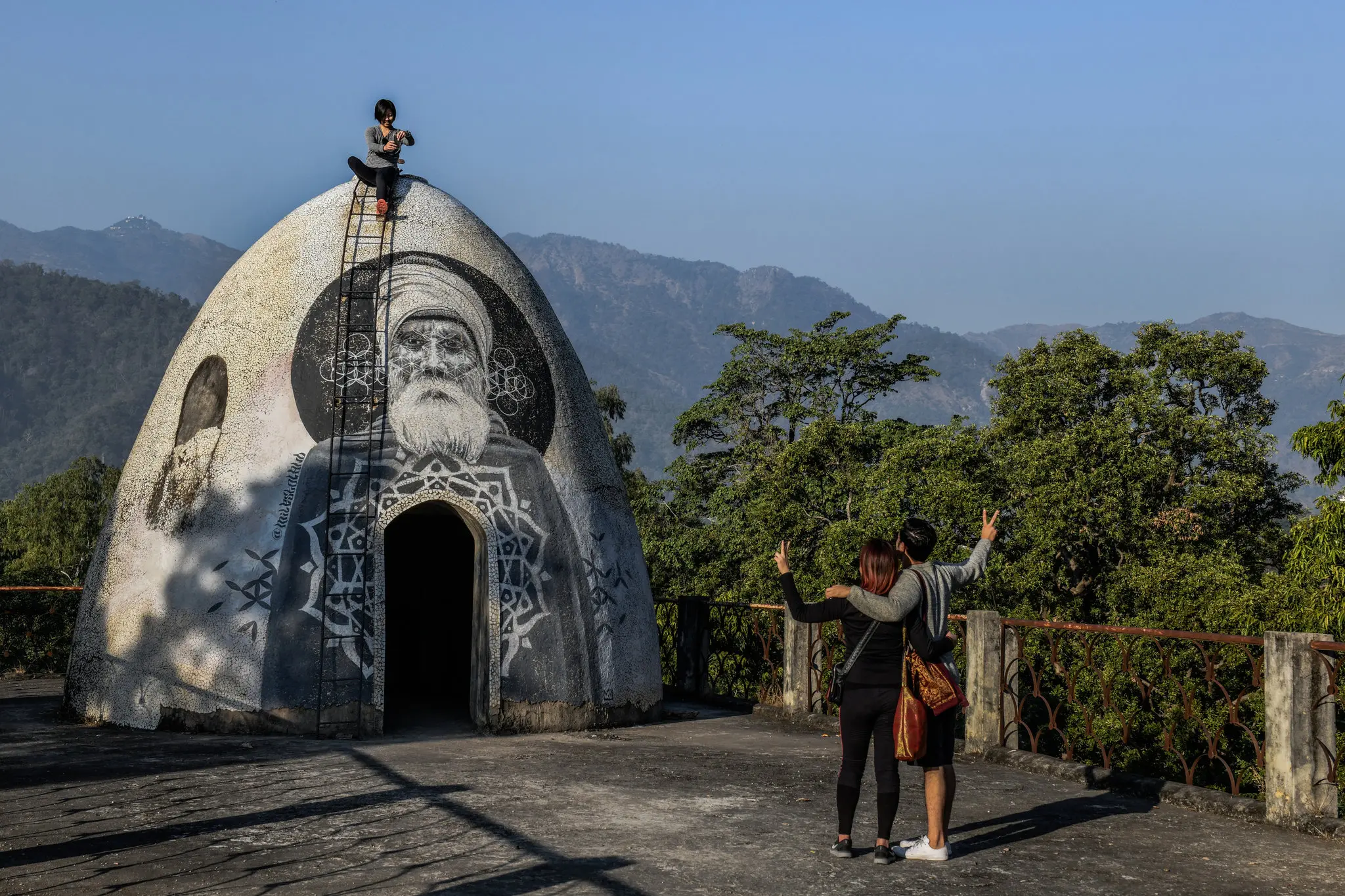
The Beatles Ashram — formally known as Maharishi Mahesh Yogi Ashram — is where John Lennon, Paul McCartney, George Harrison, and Ringo Starr stayed in 1968 while studying Transcendental Meditation. The ashram fell into disuse after the Maharishi left Rishikesh and was subsequently taken over by the forest department. It reopened to visitors and now houses an extraordinary collection of graffiti art covering the original meditation cells and dormitory buildings. Entry costs Rs 150 for Indian nationals and Rs 600 for foreign visitors. The ashram opens daily from 8:00 AM to 5:00 PM. It is one of the more unusual places to visit in Rishikesh and rewards visitors who take time to explore the full site rather than only the main meditation hall.
Tera Manzil Temple — Thirteen Floors of Devotion
Tera Manzil Temple, also known as Trimbakeshwar Temple, rises thirteen storeys near Lakshman Jhula with each floor dedicated to a different Hindu deity. The climb through the building is as much a religious experience as an architectural one, and the panoramic view from the top floor — Ganges below, hills above, and the bridges visible in both directions — is one of the best in Rishikesh. Entry is free. The temple is open daily from early morning to evening. Remove footwear before entering, as is standard at all temples in the town.
Rajaji National Park — Wildlife on the Town’s Doorstep
Rajaji National Park begins at the edge of Rishikesh and extends across a significant area of the Shivalik hills. The park is home to elephants, tigers, leopards, deer, and over 300 bird species. Jeep safaris depart from the Chilla range, approximately 15 kilometres from central Rishikesh, in the early morning and late afternoon. Entry costs Rs 150 for Indian nationals and Rs 600 for foreign visitors. A jeep costs approximately Rs 2,000 to Rs 3,000 per vehicle for a two to three hour safari. Book through the forest department office or a registered operator to ensure access.
Neer Garh Waterfall — A Short Trek from Town
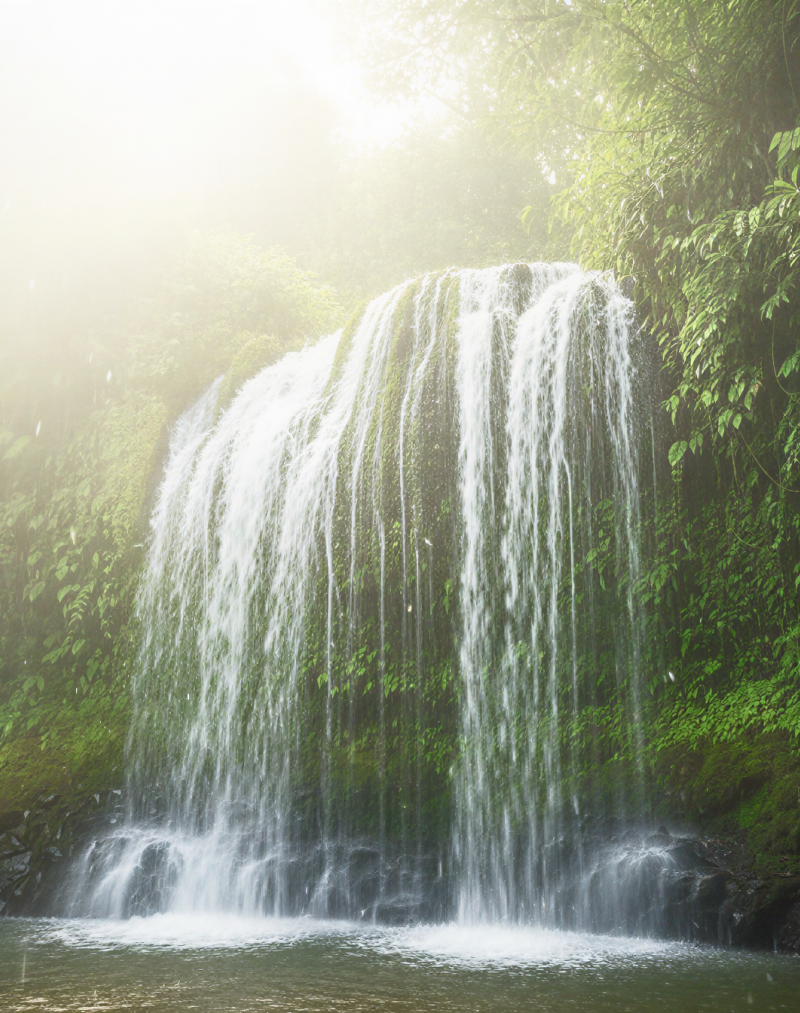
Neer Garh Waterfall sits approximately 3 kilometres from central Rishikesh and is reachable by a 30 to 45-minute walk through light forest. The trail is straightforward and well-marked. The waterfall drops through a narrow gorge into a pool below, surrounded by dense green vegetation. Entry costs Rs 50 per person. The waterfall is best visited in the morning before the afternoon crowds arrive. Carry water and wear shoes with grip — the trail has some uneven sections near the waterfall itself.
White Water Rafting on the Ganges
Rishikesh is India’s most established base for white water rafting, and the Ganges between Shivpuri and the town offers rapids ranging from Grade II to Grade IV depending on the stretch. A standard 16-kilometre rafting trip from Shivpuri costs Rs 600 to Rs 1,200 per person. The season runs from September to June, with the highest water levels and most challenging rapids between September and November. Book with a licensed operator — several operate from the riverbank near Ram Jhula.
Paying Your Way Through Rishikesh
Most of the places to visit in Rishikesh involve small, cash-based transactions — entry fees, donations, food at local dhabas, and transport by auto-rickshaw. For NRI visitors and international tourists, Mony removes the friction from all of these. Mony is a travel finance app that lets NRIs and tourists pay like locals using UPI — no foreign card fees, no currency exchange complications, and no declined payments at smaller vendors. A dhaba meal near Ram Jhula costs Rs 80 to Rs 200 per person and is best settled with a quick UPI scan rather than fumbling for exact change.

Leave a Reply