
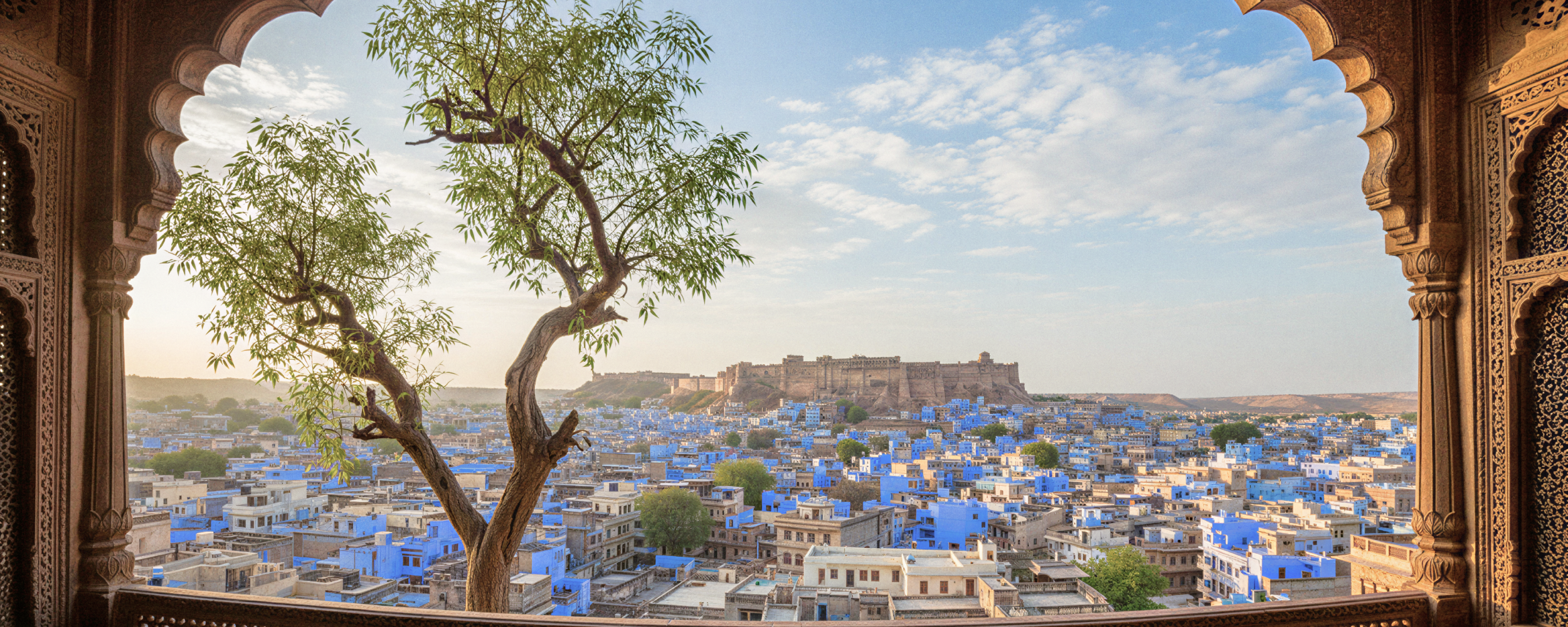
Why Jodhpur’s Spiritual Side Deserves More Attention
Most people come to Jodhpur for the forts and the blue-washed lanes. And yes, Mehrangarh is breathtaking. But spend a little more time in the city and you’ll notice something else — a quiet, persistent devotion woven into daily life. Incense smoke drifting through old bazaars, temple bells echoing across rooftops at dusk, marigold garlands piled high outside tiny shrines tucked between shops. Jodhpur’s religious landscape is layered, sincere, and honestly a little underrated.
Whether you’re a spiritual traveller, a history enthusiast, or just someone who appreciates beautiful old architecture, the religious places in Jodhpur will leave a lasting impression. Here’s a practical guide to the ones worth visiting — with everything you need to actually get there.
Getting Around: Most temples in the old city are within auto-rickshaw or e-rickshaw distance. The nearest major railway hub is Jodhpur Junction, well connected to Jaipur, Delhi, Mumbai, and Jaisalmer. For payments, Mony — a UPI wallet built for tourists — makes it easy to pay for entry tickets, prasad, and souvenirs without needing local cash. Just link your international card and you’re good to go.
The Religious Places in Jodhpur You Shouldn’t Miss
1. Chamunda Mata Temple
If you’re going to visit one temple in Jodhpur, make it this one. Chamunda Mata Temple sits at the northern edge of Mehrangarh Fort, perched dramatically above the city. It was built in 1460 by Rao Jodha himself — the founder of Jodhpur — and has been an active place of worship ever since. The goddess Chamunda is considered the city’s protector, and the belief runs deep here.
The views from the temple terrace are genuinely stunning. You’re looking out over the old city, the blue rooftops, and the Thar Desert in the distance. It gets crowded during Navratri but is relatively peaceful on regular mornings.
- Entry: Free (Mehrangarh Fort entry ₹500 – 600 for foreigners, ₹200 for Indians — valid for fort + temple area)
- Timings: 5 AM–12 PM and 1–10 PM in summer (6 AM–9 PM in winter)
- Getting there: Take an auto to Mehrangarh Fort Gate; the temple is accessible from inside the fort complex
- Tip: Visit early morning or just before sunset for the best light and fewer crowds
2. Maha Mandir
Maha Mandir — which literally means “Great Temple” — more than lives up to its name. Built in 1812 by Maharaja Shiv Singh, this Shiva temple is one of the most architecturally remarkable in all of Rajasthan. Its defining feature is the 84 intricately carved pillars that surround the main structure, each one depicting yogic postures and figures from Hindu mythology. It’s the kind of place that makes you slow down and actually look.
The temple is located a few kilometres from the old city and is far less touristy than the sites closer to the fort. It has a calm, neighbourhood-worship feel to it — local families stopping in during their morning routines, priests going about the rituals with quiet efficiency. Worth noting: part of the complex now functions as a government school, but the temple area remains intact and open to visitors.
- Entry: Free
- Timings: Morning and evening prayer hours (confirm locally as hours vary)
- Getting there: Located on Mahamandir Road, about 3 km from Jodhpur Junction; easily reachable by auto-rickshaw (₹50–80 from the clock tower area)
- Food nearby: Small chai stalls and snack vendors outside the temple; expect to spend ₹20–40 for tea and biscuits
3. Achal Nath Temple
One of Jodhpur’s oldest and most beloved Shiva temples, Achal Nath Temple is tucked into the narrow lanes of the old city near Katla Bazar. It’s not a grand monument — it’s better than that. Walk in and the atmosphere shifts immediately. Devotees sit quietly, priests conduct aarti with unhurried focus, and the white marble Shivling at the centre draws a steady stream of reverence from morning to night.
Locals describe it as a temple you can sit in for hours, and that’s not an exaggeration. The energy here is palpable — even if you’re not religious, there’s something genuinely calming about the place.
- Entry: Free
- Timings: 6:00 AM – 11:00 PM (daily)
- Getting there: Located in Rawaton Ka Bass, Katla Bazar area of the old city; walkable from the Clock Tower in about 10 minutes, or take an auto (₹30–50)
- Tip: The evening maha-aarti draws a crowd — arrive 15 minutes early for a good spot
4. Siddhanath Mahadev Temple
This one takes a bit more effort to reach, but it’s worth every step. Siddhanath Mahadev Temple sits on a rocky hill between Takhat Sagar and Kaylana Lake, about 10 km west of the city centre. The climb up rock-cut stairs is moderate — doable for most people — and the panoramic views of Jodhpur’s blue cityscape from the top are spectacular.
The temple was established by revered saints Paramayogi Sant Narayan Swami and Mauni Nepali Baba, and carries a deep spiritual heritage. On Mondays during the holy month of Shravan and on Mahashivratri, it comes alive with pilgrims. On regular days, it’s one of the most peaceful spots in all of Jodhpur.
- Entry: Free
- Timings: 10:00 AM – 2:00 PM (confirm locally for morning hours during festivals)
- Getting there: About 10 km from Jodhpur Junction; hire a taxi or auto for the trip (₹150–200 one way). Not ideal for solo walkers without local guidance
- Tip: Visit during daytime only — the rocky hill terrain is difficult to navigate after dark
5. Thakur Ji Shree Raj Ranchhodji Temple
Thakur Ji Shree Raj Ranchhodji Temple is one of the oldest Krishna temples in Jodhpur, perched about 50 steps above street level near Sojati Gate. It’s not on the main tourist trail, which makes it feel like a genuine find. The elevation gives you a lovely aerial view over the railway station and surrounding old city rooftops — a nice bonus.
The temple is open 24 hours, and the early morning hours (before 8 AM) are particularly serene. If you’re in Jodhpur around Janmashtami, this is one of the best places in the city to experience the celebrations — the courtyard fills with devotional music and colour.
- Entry: Free
- Timings: Open 24 hours
- Getting there: Located near MG Hospital Road, Sojati Gate — walkable from Jodhpur Junction in about 10 minutes
6. Jain Temples
Jodhpur has a historically significant Jain community, and that heritage is beautifully preserved in temples scattered across the city. A great starting point is the Bheru Bagh Parshvanath Jain Shvetamber Temple in Sardarpura — one of the most prominent Jain places of worship in the city, with intricate architectural detailing, a peaceful compound, and dharamshala facilities for pilgrims.
The carvings at Jodhpur’s Jain temples are extraordinary — floral motifs, celestial figures, and geometric patterns that showcase a remarkable level of craft. Non-Jain visitors are generally welcome but should dress conservatively (no leather items inside) and be respectful of ongoing prayers.
- Entry: Free (small donations appreciated)
- Timings: Open 24 hours (prayer hours vary)
- Getting there: Sardarpura is centrally located; about 2 km from Jodhpur Junction, accessible by auto (₹40–60)
7. Ganesh Temple Ratanada
Jodhpur’s Ganesh Temple in Ratanada is one of the most beloved in the city — and the numbers back that up (rated 4.8 by thousands of visitors). Situated on a hill 108 feet above sea level, it’s dedicated to Siddh Gajanand (Lord Ganesh), and devotees traditionally offer the first wedding invitation here before any other guest receives one. That tells you everything about what this temple means to Jodhpur.
The hilltop location gives you a sweeping view of the city below, and the well-maintained gardens around the temple make it a genuinely pleasant place to spend an hour. On Wednesdays and Chaturthi (4th lunar day), expect a festive atmosphere with flowers, sweets, and longer queues.
- Entry: Free
- Timings: 5:00 AM – 10:00 PM (daily)
- Getting there: Located on Circuit House Road, Ratanada — about 4 km from the old city; auto-rickshaw (₹60–100) or taxi recommended
- Food nearby: Mithai shops nearby sell modak and ladoo — the traditional Ganesh offerings — for ₹10–30 per piece
Practical Tips for Visiting Temples in Jodhpur
What to wear: Shoulders and knees covered is the baseline expectation at most temples. Carry a light scarf or dupatta in your bag — you’ll use it often. Some temples also ask you to cover your head inside.
Footwear: You’ll be removing your shoes at every temple. Slip-ons make life significantly easier. There are usually attendants watching shoes outside major temples; a ₹10–20 tip is appreciated.
Photography: Always ask before pointing a camera at worshippers. Some inner sanctums don’t allow photography at all — look for signs or follow the lead of locals.
Payments: Mony is genuinely useful here. Whether you’re buying garlands of marigold (₹20–50), prasad boxes (₹30–100), or making a donation at the temple box, having a UPI wallet linked to your international card means you’re not constantly scrambling for exact change. Most temple vendors and nearby shops in Jodhpur now accept UPI.
Best time to visit: October to March is ideal — the weather is pleasant and festival season (Diwali, Navratri) brings the temples to life. Avoid midday visits in summer (April–June) when temperatures regularly cross 40°C.
Getting to Jodhpur
- By air: Jodhpur Airport has flights from Delhi, Mumbai, Jaipur, and Hyderabad. A taxi to the city centre costs ₹300–500.
- By train: Jodhpur Junction is well connected. The overnight Mandore Express from Delhi is a popular and affordable option.
- By road: Jodhpur is about 6 hours from Jaipur and 5.5 hours from Udaipur by road — both routes are scenic and comfortable.
Jodhpur rewards slow travel. Budget at least two full days for the religious sites alone, and you’ll leave with a much richer picture of the city than the fort-and-market itinerary offers.


Leave a Reply