
Table of Contents
The Ajanta Caves rank among the most extraordinary archaeological sites in Asia. This Ajanta Caves travel guide covers everything you need to visit them well. Builders carved these 30 rock-cut Buddhist monuments into a horseshoe-shaped cliff in the Sahyadri hills of Maharashtra between the 2nd century BCE and the 6th century CE. The caves hold the finest surviving examples of ancient Indian mural painting — works applied to plastered stone that have endured for over a millennium in near-darkness. UNESCO recognised the site in 1983. For anyone interested in history, art, or ancient architecture, a day here ranks among the most rewarding available anywhere in India.
History of the Ajanta Caves
Artisans carved the caves across two main periods. The earlier caves — primarily Caves 9, 10, 12, and 13 — date to the Satavahana dynasty between the 2nd century BCE and the 1st century CE. Subsequently, Vakataka dynasty patrons commissioned the later and more elaborate caves in the 5th and 6th centuries CE. This second period coincided with the flowering of Mahayana Buddhism in the Deccan. Buddhist monks used the site as a monsoon retreat and teaching centre. After Buddhism declined in the region, the caves fell into disuse and eventually became overgrown. A British officer named John Smith rediscovered them in 1819 while hunting in the hills above the Waghora River.
Architecture — Chaityas and Viharas
Chaitya Grihas — Prayer Halls
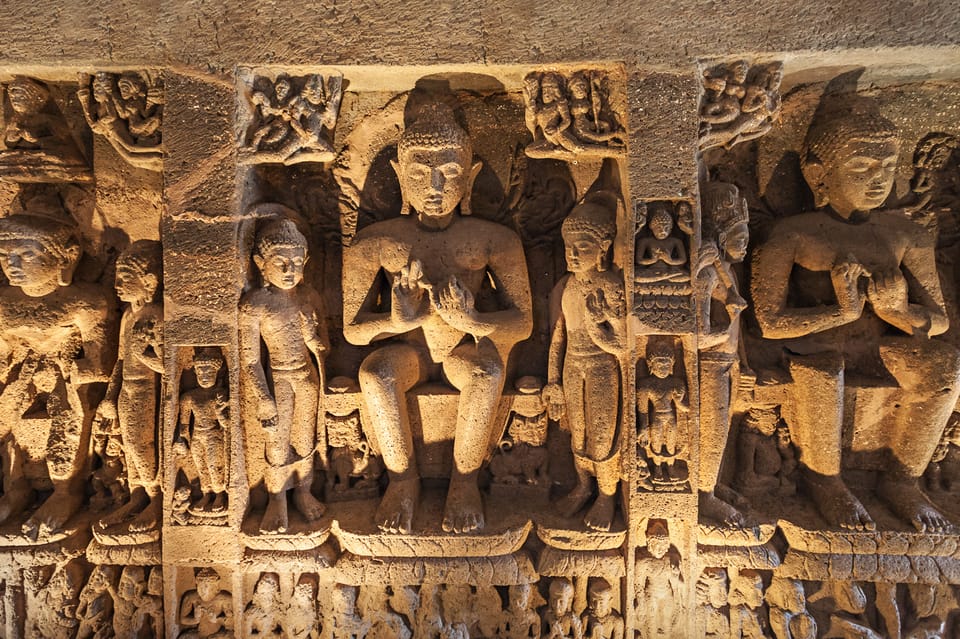
Cave 9 and Cave 10 are among the oldest surviving Chaitya prayer halls in India. Both feature barrel-vaulted ceilings and a stupa at the far end. Cave 19, from the later period, is considerably more elaborate. Its facade carries rich sculptural detail, and its interior columns display the increased resources of Vakataka-era patronage.
Viharas — Monastic Halls
Monks used the Viharas as residential and teaching spaces. Each follows a standard layout — a central hall surrounded by small cells, with a shrine at the rear. Cave 1 and Cave 2 are the finest examples of the later Vihara type. Both preserve exceptionally complete paintings and elaborate carved doorways. Cave 4 is the largest Vihara in the complex.
The Murals — India’s Greatest Surviving Paintings
The paintings at Ajanta are the primary reason most visitors make the journey. Artists covered the walls and ceilings of several caves in scenes drawn from the Jataka tales — stories of the Buddha’s previous lives — as well as court scenes and processions. The most celebrated works appear in Cave 1, where the Bodhisattva Padmapani and the Bodhisattva Vajrapani face each other across the antechamber. These two figures rank among the most reproduced images in Indian art history. Cave 2, moreover, preserves an almost completely painted ceiling — a rare survival anywhere in the ancient world. Artists ground natural minerals into pigments — ochre, red lead, lapis lazuli, and lamp black — and applied them onto carefully prepared lime plaster.
Practical Information
Entry Fees and Timings
The Ajanta Caves open Tuesday to Sunday from 9:00 AM to 5:30 PM. Authorities close the site on Mondays. Entry costs Rs 40 for Indian nationals and Rs 600 for foreign visitors. Cave 1 and Cave 2 carry an additional lighting fee of Rs 5 per cave. Visitors may photograph most caves without flash. A torch helps in darker interiors. Allow at least three to four hours to see the site properly.
Getting There
The nearest city is Aurangabad, approximately 100 kilometres from the caves. Buses depart regularly from Aurangabad Bus Stand to the Ajanta T-junction, from which a shuttle bus or shared jeep covers the final 4 kilometres. The journey takes approximately two hours. A private cab from Aurangabad costs Rs 1,500 to Rs 2,500 for a return trip. Aurangabad Railway Station connects the city to Mumbai, Pune, and other major destinations.
Food Near the Site
A canteen at the site entrance serves basic meals for Rs 80 to Rs 200 per person. Several small dhabas operate near the T-junction on the main road. Pack water before entering — the walk between caves involves uphill sections, and the site provides limited shade.
Tips for Getting the Most from Your Visit
Arrive when the gates open at 9:00 AM. The caves are largely empty for the first hour, which makes examining the paintings considerably easier. Start with Cave 1 and Cave 2, since these hold the finest murals and deserve your full attention before fatigue sets in. Additionally, bring a compact torch for ceiling paintings in the Viharas. The caves are numbered but not in chronological order — the site guide available at the entrance explains the historical sequence clearly.
For NRI visitors and international tourists, Mony makes entry fees, canteen bills, and transport payments seamless. Mony is a travel finance app that lets NRIs and tourists pay like locals using UPI. As a result, there are no foreign card fees and no declined payments at remote sites where card terminals are unreliable. This Ajanta Caves travel guide also recommends booking return transport before entering the site, as shared vehicles fill up quickly in the late afternoon.

Leave a Reply