
Spring in Color: How to Experience the Festival of Rongali Bihu Like a Local
Table of Contents
The Rongali Bihu-Festival of India is one of the country’s most joyful and culturally specific annual celebrations. Held each April in Assam to mark the start of the agricultural new year, it fills the state with dhol drumming, Bihu dance performances, handwoven gifts, and seasonal feasts. Unlike many Indian festivals that centre on a specific religious site, the Rongali Bihu-Festival of India belongs to the streets, fields, and community grounds — which means visitors can participate rather than merely observe.
Where to Experience the Rongali Bihu Festival
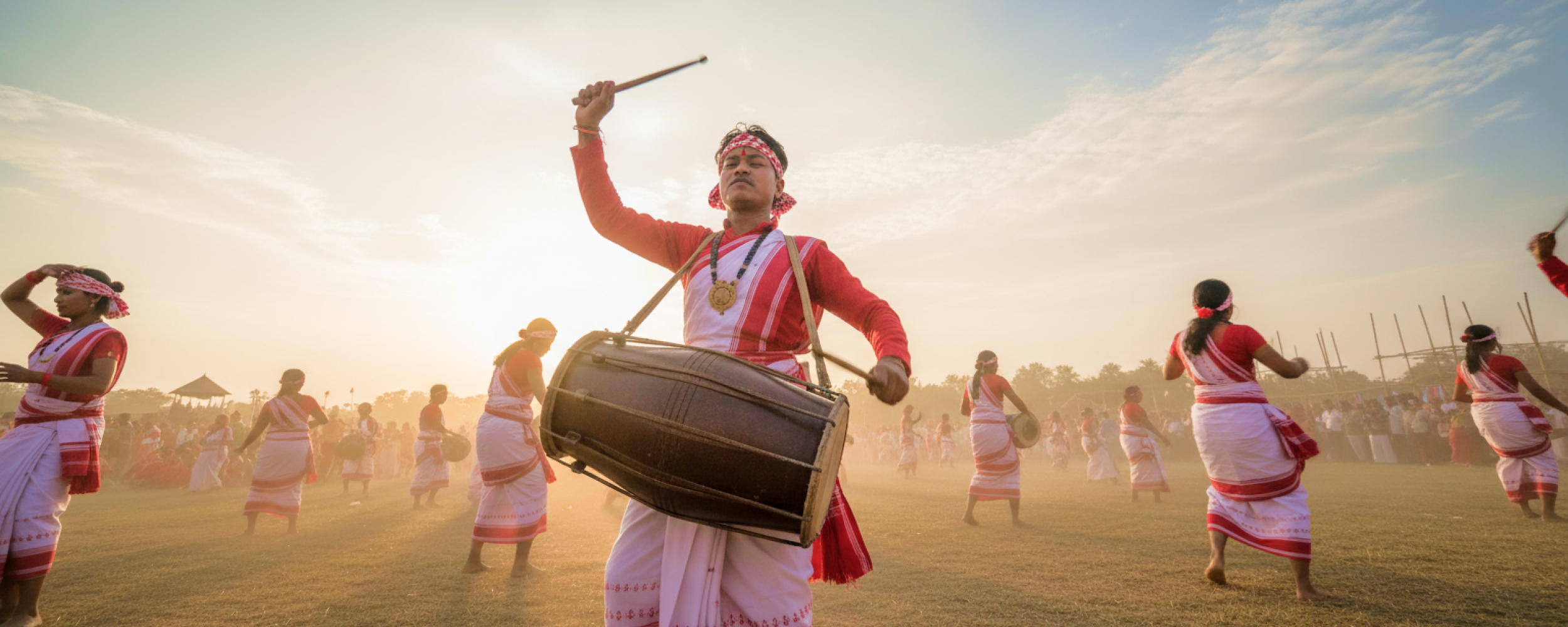
The Rongali Bihu-Festival of India finds you quickly in Assam — you rarely have to look far. In Guwahati, the largest celebrations take place at Latasil Ground and Shilpagram, where troupes of performers in traditional dress dance to dhol and pepa — the indigenous drum and buffalo horn — in front of large crowds. Entry is generally free or involves a nominal fee of Rs 50 to Rs 100 at organised events.
For a more intimate version of the Rongali Bihu-Festival of India, the historic town of Sivasagar and the river island of Majuli offer celebrations that are more closely tied to village and agricultural traditions. Majuli, accessible by ferry from Nimati Ghat in Jorhat, is particularly worth the journey — the island is the cultural heartland of Vaishnavite Assamese tradition and its Bihu celebrations carry a depth that larger venues cannot replicate.
What to Wear
No specific dress is required for visitors attending the Rongali Bihu-Festival of India — the Assamese are genuinely welcoming and make no distinction between local and foreign attendees. However, if you want to participate more fully, hundreds of stores in Guwahati sell traditional Assam silk mekhela sadors (for women) and dhutis (for men) at Rs 500 to Rs 3,000 depending on quality. The silk versions are considerably more expensive than cotton. Locals are happy to help with draping and styling.
The Gamosa — The Festival’s Most Meaningful Gift
The gamosa is a hand-woven red and white linen towel that carries deep symbolic significance during the Rongali Bihu-Festival of India. Assamese women weave gamosas on home looms. They present them to elders, teachers, guests, and loved ones as a token of respect and renewal. If you are staying with a local family or attending a community celebration, expect your host to drape a fresh gamosa over your shoulders. Accepting it gracefully and wearing it during the celebrations is the appropriate response. Gamosas are also available in markets across Guwahati for Rs 150 to Rs 600 as gifts or personal keepsakes.
Joining the Celebrations
Active participation in the Rongali Bihu-Festival of India is encouraged. The dhol and pepa are approachable instruments for beginners — most experienced players are happy to demonstrate. The Bihu dance, performed in groups, has no strict requirement for technical precision. Women performers at community celebrations typically welcome visitors who want to learn the basic steps. The emphasis throughout the festival is on collective joy rather than individual performance.
The Festival Feast
The food at the Rongali Bihu-Festival of India reflects Assam’s agricultural calendar. Xaax (fresh seasonal greens), masor tenga (fish cooked with sour fruits like elephant apple or tomato), and fresh fruits including kamranga (star fruit) and jalphai (Indian olives) appear at community meals. The cooking is light and vegetable-forward by design — Bihu food celebrates what the season produces rather than what the kitchen can elaborate. If invited to eat with a local family, accept. The experience is the most direct way to understand what the festival means to the people who celebrate it.
Getting to Assam for Rongali Bihu
Guwahati Airport connects to all major Indian cities with multiple daily flights. The festival takes place across the first two weeks of April, with the main celebrations on Bohag Bihu day itself — typically April 14 or 15. Book accommodation in Guwahati at least four to six weeks ahead as the city fills during the festival period. For travel to Majuli, take a train from Guwahati to Jorhat Railway Station and then a ferry from Nimati Ghat — the crossing takes approximately one hour.
Paying Your Way Through the Festival
Markets, textile shops, food stalls, and transport across Assam during the Rongali Bihu-Festival of India accept cash and increasingly UPI. For NRI visitors and international tourists, Mony keeps every payment seamless — from buying a gamosa at a Guwahati market to paying for a homestay on Majuli. Mony is a travel finance app that lets NRIs and tourists pay like locals using UPI. As a result, there are no foreign card fees and no currency exchange complications while you focus on the festival itself.






Leave a Reply