
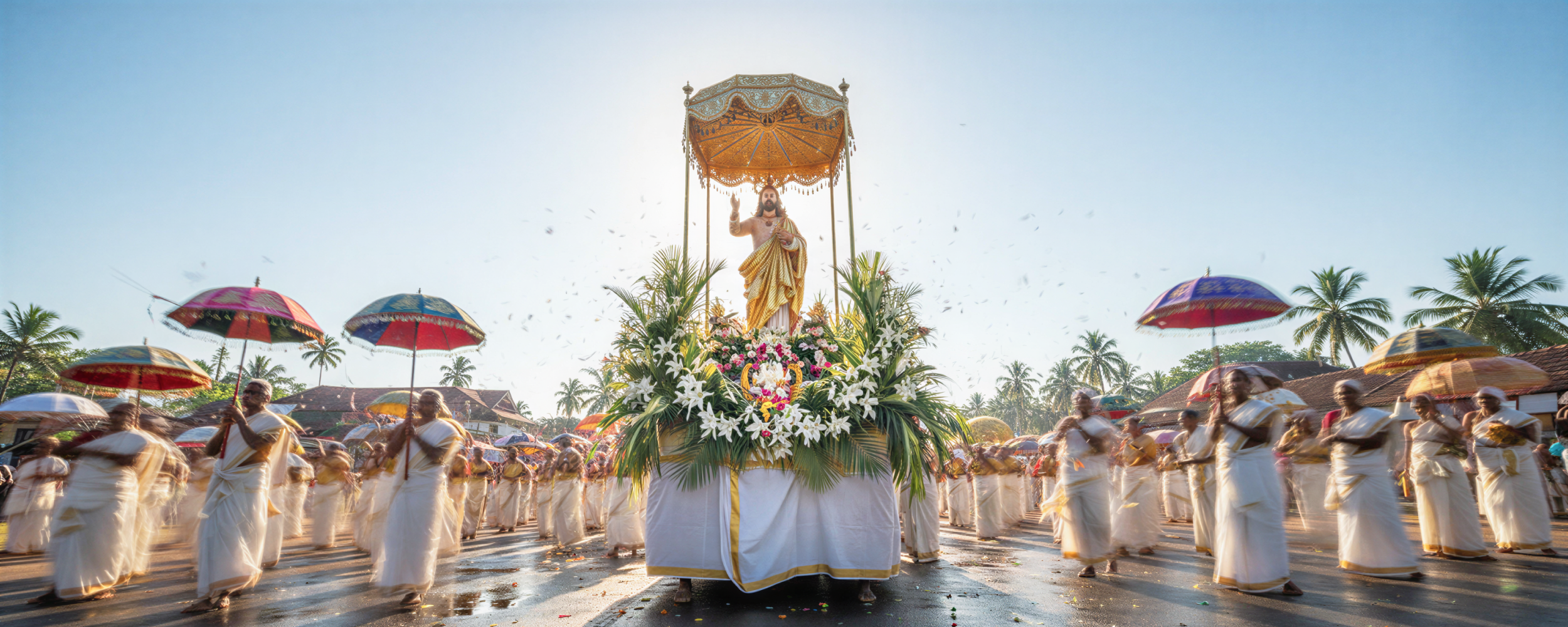
Experiencing Easter in Kerala: A Feast for the Senses and the Spirit
Table of Contents
Easter in Kerala is unlike Easter anywhere else in India. Kerala is home to one of the oldest Christian communities in the world — the Malayali Syrian Christians, who trace their origins to the apostle Thomas in the first century AD. Consequently, Easter in Kerala carries a depth of tradition and a specifically local character that visitors from outside the state rarely encounter. This guide covers what to expect during Easter in Kerala, where to experience it, and practical information for planning a visit around the festival.
Holy Saturday — The Vigil of Candles and Hymns
Easter in Kerala begins at 10:00 PM on Holy Saturday, when churches across the state light thousands of candles and devotees gather for the Easter vigil mass. Churches range from grand basilicas in cities to tiny village chapels along backwater lanes. Devotees wear white and gold and sing hymns in Malayalam that carry the particular resonance of centuries of unbroken practice. The vigil runs until after midnight. In particular, the churches of Fort Kochi and Kottayam draw the largest gatherings and are the most atmospheric for visitors who want to experience the vigil. Entry is open to all — dress modestly and observe quietly.
Easter Sunday — Church Mass and Sunday Best
Easter Sunday morning is one of the most visually memorable aspects of Easter in Kerala. Church bells carry across the backwaters and through village streets from approximately 6:00 AM. Devotees arrive in their Sunday finest — women in white and gold linen sarees, men in elegant white mundus (a garment worn around the waist). The combination of Kerala’s specific textile traditions with the solemnity of the occasion produces a visual character that is entirely its own. The Easter Sunday mass typically runs for two to three hours. Visitors are welcome at most churches. Moreover, the churches of Fort Kochi and the Syrian Orthodox churches of Kottayam both provide a representative experience of Easter in Kerala at its most traditional.
The Easter Feast — Kerala Christian Food at Its Best
After the long fast of Lent, the Easter meal is the most anticipated of the Easter in Kerala rituals for those lucky enough to share one. The menu at a Malayali Christian Easter table typically includes the following.
- Appam with chicken stew — lacy rice pancakes with a delicate coconut milk and spice broth. Costs Rs 80 to Rs 150 at heritage restaurants.
- Duck curry — rich, spiced, with the particular depth that duck produces when slow-cooked in Kerala spice blends. Costs Rs 300 to Rs 500 at specialty restaurants.
- Meen curry — mackerel or kingfish in coconut milk curry with kudampuli. Costs Rs 200 to Rs 350.
- Beef ularthiyathu — slow-cooked, dry-spiced beef stir-fry that is specific to the Syrian Christian culinary tradition. Costs Rs 250 to Rs 400.
- Thoran — stir-fried vegetable preparations with grated coconut, served as side dishes throughout the meal.
- Elaneer pudding and banana halwa — tender coconut jelly and sweet banana-based dessert to close the feast.
Several heritage homestays and restaurants in Fort Kochi and Kochi‘s Mattancherry area serve Easter meals during the festival weekend. Additionally, visitors staying at homestays run by Syrian Christian families are frequently invited to join the family Easter meal — an invitation worth accepting without hesitation.
Where to Experience Easter in Kerala
Fort Kochi and Kottayam are the two most rewarding destinations for Easter in Kerala. Fort Kochi‘s colonial churches — including St. Francis Church and Santa Cruz Basilica — carry a European heritage that adds a further layer to the experience. Kottayam, however, is the heartland of the Syrian Christian community and provides the most deeply rooted version of Easter in Kerala. The drive from Kochi to Kottayam takes approximately 1.5 hours and costs Rs 800 to Rs 1,200 by cab.
Practical Tips for Easter in Kerala
Easter in Kerala falls in March or April depending on the year. The weather is warm and humid — light cotton and linen clothing are essential. Book accommodation in Fort Kochi and Kottayam at least four to six weeks ahead, as heritage homestays and boutique hotels fill quickly during the Easter weekend. For NRI visitors and international tourists experiencing Easter in Kerala, Mony makes every payment throughout the trip seamless. Mony is a travel finance app that lets NRIs and tourists pay like locals using UPI. As a result, there are no foreign card fees and no declined payments at restaurants, homestays, or market stalls throughout Easter in Kerala.





Leave a Reply