
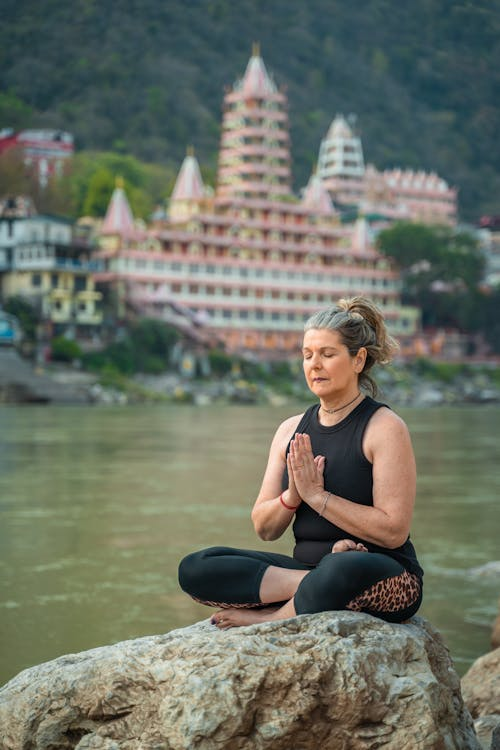
Exploring the Spiritual Side of Rishikesh: Temples and Ashrams
Table of Contents
Rishikesh carries its spiritual identity more openly than almost any other town in India. The temples in Rishikesh range from riverside ghats where evening aarti fills the air with chanting and firelight to hilltop shrines requiring a trek through forest above 1,300 metres. Alongside the temples, a series of well-established ashrams offer yoga, meditation, and Vedantic teaching that draws visitors from across the world. This guide covers the most significant spiritual sites with practical information for each.
Triveni Ghat — The Primary Bathing Ghat
Triveni Ghat is the main bathing ghat in Rishikesh and the most central of the temples in Rishikesh for first-time visitors. The ghat marks a point where the Ganges is believed to carry the spiritual confluence of three sacred rivers. Pilgrims bathe here from early morning. The evening Ganga Aarti — priests performing rituals with oil lamps while chanting devotional songs — takes place daily at sunset, typically around 6:00 PM to 7:00 PM depending on the season. Entry is free. Arriving 20 to 30 minutes early secures a good viewing position. Auto-rickshaws from Ram Jhula cost approximately Rs 40 to Rs 60.
Parmarth Niketan Ashram — Yoga and Riverside Aarti
Parmarth Niketan Ashram sits directly on the Ganges bank and is one of the largest ashrams in Rishikesh. Daily yoga classes, spiritual lectures, and meditation sessions run throughout the day. The ashram conducts its own Ganga Aarti on its private ghat each evening — distinct from the Triveni Ghat aarti and drawing a large regular crowd. Day visitors are welcome. Entry to the ashram and aarti is free. Yoga class fees vary by programme. The ashram is located near Ram Jhula, reachable on foot from most central Rishikesh accommodation.
Neelkanth Mahadev Temple — Forest Shrine at 1,330 Metres
Neelkanth Mahadev Temple sits at 1,330 metres in the forests above Rishikesh and is one of the most significant of the temples in Rishikesh dedicated to Lord Shiva. According to tradition, this is the location where Shiva consumed the poison produced during the churning of the cosmic ocean. The approach through dense forest adds considerably to the experience. Entry is free. A shared jeep from Rishikesh to the temple costs Rs 100 to Rs 200 per person. The journey takes approximately one hour. The temple opens from 6:00 AM to 7:00 PM. Carry water for the return journey.
Kunjapuri Devi Temple — Himalayan Sunrise Views
Kunjapuri Devi Temple sits atop a hill approximately 25 kilometres from Rishikesh and is dedicated to Goddess Durga. The panoramic views of the Himalayan range and the Ganges valley from the temple platform are exceptional, particularly at sunrise when the peaks catch the first light. The early morning hike from the base takes approximately 30 to 45 minutes. Entry is free. A cab from Rishikesh costs Rs 800 to Rs 1,200 for the return trip. Depart by 4:30 AM for a sunrise visit. The temple opens from 6:00 AM, though the hilltop is accessible before the official opening.
Swarg Ashram — A Quiet Spiritual Neighbourhood
Swarg Ashram is less a single institution and more a neighbourhood on the eastern bank of the Ganges, accessible by crossing Ram Jhula. The area carries multiple small temples, ashrams, and shrines in a quieter, more contemplative setting than the Ram Jhula market area. Walking through Swarg Ashram in the early morning, when sadhus are performing their rituals and the lanes are calm, is one of the most genuinely peaceful of all the temples in Rishikesh experiences. No entry fees apply to the general area. Several resident ashrams welcome visitors for morning programmes.
Sivananda Ashram — Yoga Education on the Riverbank
Sivananda Ashram, established by Swami Sivananda, sits on the Ganges bank and focuses on Vedanta, yoga, and spiritual education. The ashram maintains an extensive library, offers courses of varying lengths, and welcomes visitors who come with genuine interest in the teachings. Short-term visitors can attend specific lectures and programmes. Contact the ashram directly for current programme fees and availability. The ashram is located near the Divine Life Society on the Muni Ki Reti stretch of the river.
Practical Tips for Visiting Temples in Rishikesh
Dress modestly at all temples and ashrams — shoulders and knees should be covered. Remove footwear before entering any inner sanctum. Photography policies vary by site — ask before photographing religious ceremonies. Donations at temples are conventional but not compulsory. For NRI visitors and international tourists, Mony keeps all local payments seamless throughout the day — temple donations, auto fares, yoga class fees, and food at riverside dhabas all work via UPI scan. Mony is a travel finance app that lets NRIs and tourists pay like locals using UPI, with no foreign card fees and no currency exchange required.


Leave a Reply