
Delhi Travel Guide for International Tourists (2026)
Table of Contents
Delhi is India’s entry point. Most international flights land here first, and the city hits you immediately — the traffic, the noise, the Mughal monuments rising above the chaos, the smell of frying samosas from a stall that’s been there since your grandparents were born. It’s overwhelming and exhilarating in equal measure.
The city operates on two timelines simultaneously. Old Delhi — the Mughal capital, with its 17th-century mosques, narrow lanes, and food markets that haven’t fundamentally changed in centuries. And New Delhi — the British-designed capital with its wide boulevards, government buildings, modernist architecture, and a rapidly growing cafe and restaurant scene.
Most tourists pass through Delhi quickly on their way to the Taj Mahal or Rajasthan. That’s a mistake. Delhi deserves at least 2–3 days, and its street food alone is worth the trip.
Delhi at a Glance
| Detail | Info |
|---|---|
| Best time to visit | October – March (cool, festival season, clear skies) |
| Avoid | May – June (extreme heat, 42–47°C) and late July–Aug (humid monsoon) |
| Airport | Indira Gandhi International (DEL) — India’s busiest. Direct flights from most global hubs |
| Getting around | Delhi Metro (excellent), Uber/Ola, auto-rickshaws. Do NOT drive yourself. |
| Currency | Indian Rupee (₹). ~₹84 = $1 USD |
| Payment | UPI everywhere including metro, street food, monuments. Cards at hotels/malls. Cash for tips. |
| Daily budget | Budget: ₹2,500–4,000 │ Mid-range: ₹6,000–10,000 │ Luxury: ₹15,000+ |
| How many days? | 2–3 days minimum. 4–5 with day trips to Agra or Mathura. |
What to See in Delhi
Old Delhi
Red Fort (Lal Qila) — The defining symbol of Mughal Delhi. Massive red sandstone walls, imperial halls, gardens, and museums. Entry: ₹600 for foreigners. The sound and light show in the evening is worth catching. Budget 1.5–2 hours. UPI at the ticket counter.
Jama Masjid — India’s largest mosque, built in 1656. The courtyard can hold 25,000 worshippers. Climb the minaret (₹300) for a panoramic view of Old Delhi’s rooftops and the Red Fort. Free entry to the courtyard; modest dress required; shoes off.
Chandni Chowk — Delhi’s oldest and most chaotic market street. Spices, textiles, electronics, wedding supplies — it sells everything. But you’re here for the food (see our food guide). Take the metro to Chandni Chowk station and walk. Come hungry.
New Delhi & South Delhi
Humayun’s Tomb — The precursor to the Taj Mahal and arguably just as beautiful. Persian-style gardens, red sandstone, and white marble. A UNESCO site that’s less crowded and more peaceful than the Taj. Entry: ₹600 for foreigners. UPI accepted. 1–1.5 hours.
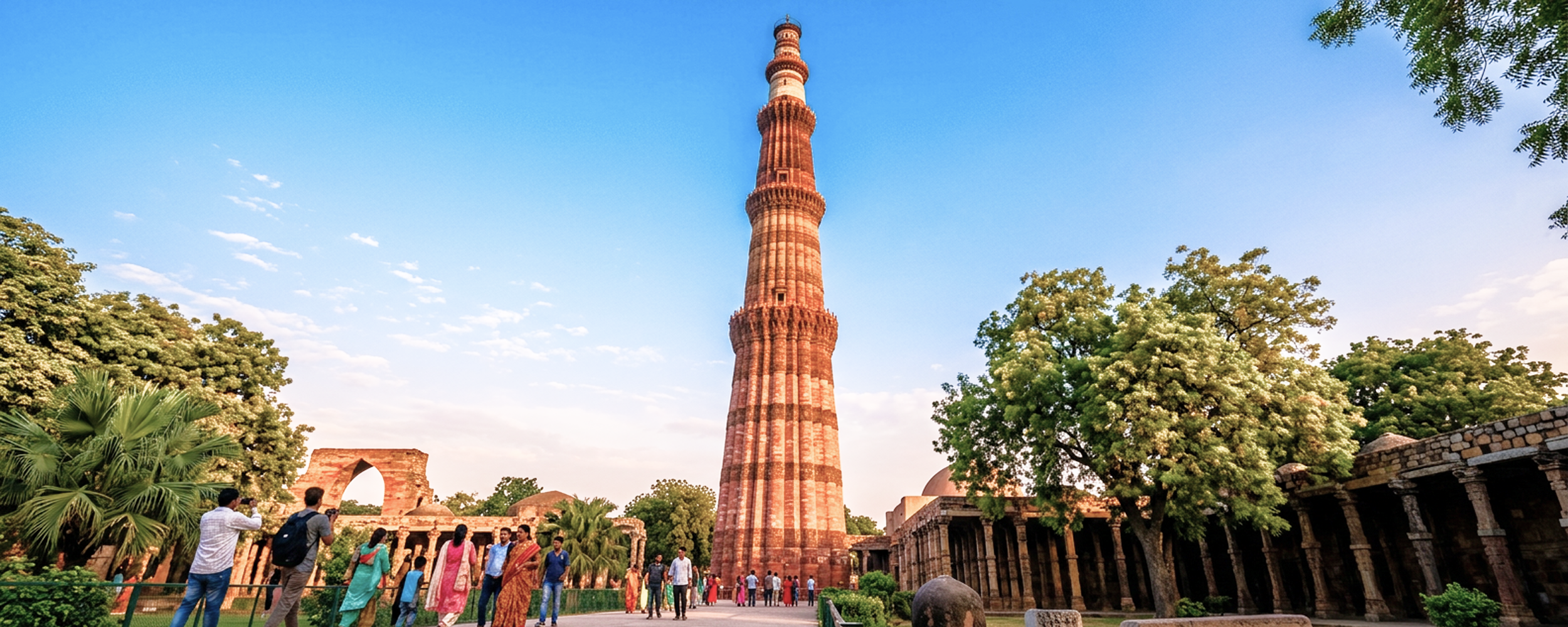
Qutub Minar — A 73-metre minaret built in 1193, surrounded by the ruins of India’s first mosque. The carved stone is extraordinary. Entry: ₹600 for foreigners. UPI accepted. In South Delhi — combine with Mehrauli Archaeological Park.
India Gate & Rajpath — The ceremonial boulevard of New Delhi. India Gate is a war memorial that’s best visited at dusk when it’s illuminated. Free. Good for an evening walk.
Lotus Temple — A Bahá’í house of worship shaped like a lotus flower. Striking modern architecture, serene gardens, and genuinely peaceful interior. Free. Open to all faiths. 30–45 minutes.
Lodhi Art District — India’s first open-air street art gallery. 50+ murals by Indian and international artists across the Lodhi Colony neighbourhood. Free. Walkable in 1–2 hours. Combine with a coffee at Blue Tokai.
Markets & Shopping
Khan Market — Upscale shops, bookstores, and restaurants. Delhi’s most polished shopping area. Bahrisons Bookshop is a gem. Cards and UPI accepted everywhere.
Dilli Haat — Open-air craft market with artisans from across India. Textiles, pottery, jewellery, and regional food stalls. Entry: ₹30. Perfect for souvenirs. UPI widely accepted.
Sarojini Nagar — Delhi’s famous street fashion market. Export surplus and bargain clothing. Intense but rewarding if you enjoy haggling. UPI accepted at most stalls.
Entry Fees at a Glance (2026)
| Attraction | Indian | Foreigner | UPI? |
|---|---|---|---|
| Red Fort | ₹50 | ₹600 | Yes |
| Humayun’s Tomb | ₹40 | ₹600 | Yes |
| Qutub Minar | ₹40 | ₹600 | Yes |
| Jama Masjid minaret | ₹300 | ₹300 | Cash |
| Dilli Haat | ₹30 | ₹30 | Yes |
| National Museum | ₹20 | ₹650 | Yes |
| Lotus Temple | Free | Free | n/a |
Where to Eat in Delhi
Delhi is India’s street food capital. The food in Old Delhi alone justifies the trip. For the full breakdown, see our Where to Eat in Delhi guide. Quick highlights:
Street food essentials: Paranthe Wali Gali (parantha alley in Chandni Chowk, ₹60–100 per plate), Karim’s near Jama Masjid (Mughlai kebabs and curries since 1913, ₹200–400), Natraj Dahi Bhalle Wala (chaat, ₹60–80), and Roshan Di Kulfi (₹40–70).
Modern restaurants: Indian Accent at The Lodhi (India’s most celebrated fine dining, ₹5,000–8,000 per person), Bukhara at ITC Maurya (legendary dal and tandoor, ₹4,000–6,000), SodaBottleOpenerWala for Parsi comfort food (₹600–1,000), and Ama Café at Majnu Ka Tilla for Tibetan food (₹300–500).
Getting Around Delhi
Delhi Metro
Excellent, clean, cheap, and air-conditioned. Covers all major tourist areas. Fares: ₹20–60 per journey. Buy a Tourist Card (₹250 for 3 days unlimited) if you’ll use it heavily. UPI accepted for recharging metro cards via the app.
Uber & Ola
Reliable throughout Delhi. Best for door-to-door, especially at night. UPI accepted. An airport to city centre ride costs ₹300–500.
Auto-Rickshaws
Classic Delhi experience. Insist on the meter or use Ola Auto (app-based, transparent pricing). Most auto drivers accept UPI. A cross-city ride costs ₹50–150.
Cycle-Rickshaws
Best for Old Delhi’s narrow lanes where cars can’t go. Agree on price before getting in (₹30–80 for a 15-minute ride). Cash only for most.
Money & Payments in Delhi
Delhi is one of the most digitally advanced cities in India for payments. The metro, monument ticket counters, Chandni Chowk street vendors, Uber, Khan Market shops — UPI works everywhere.
Recommendation: Set up Mony before you fly. Load ₹15,000–20,000 (Delhi is slightly more expensive than other Indian cities). Carry ₹2,000–3,000 cash for tips, cycle-rickshaws, and the occasional vendor without a QR code.
Full payment guide: How to Pay in India as a Tourist
Practical Tips
Air Quality
Delhi’s air pollution is worst in November–January. If you have respiratory issues, bring an N95 mask. The rest of the year is manageable for most visitors.
Scams
The classic Delhi scams are “your hotel is closed” (from taxi drivers), “this monument is closed today” (from touts wanting commission), and overpriced autorickshaws. Use the metro and Uber to avoid most of them. See our Is India Safe for Tourists? guide.
Connectivity
Get a SIM at the airport (Airtel or Jio, ₹200–500). Free WiFi is available at metro stations.
Pay Like a Local in Delhi
From the ₹60 parantha in Chandni Chowk to the ₹6,000 dinner at Bukhara, Delhi runs on UPI. With Mony, your phone is your wallet — at the street stall, the metro, the monument, and the market. Set up before you fly and you’ll pay for your airport taxi within minutes of landing.
Explore More Delhi Content




Leave a Reply