
Delhi’s UNESCO Sites You’ll Actually Want to Visit
The UNESCO World Heritage Sites in Delhi cover more than a thousand years of architectural ambition — from the Indo-Islamic minarets of the 12th century to the Mughal garden tombs and imperial fortresses of the 17th. Each of the UNESCO World Heritage Sites in Delhi covered here reflects a different chapter in the city’s history, and together they make Delhi one of the most architecturally significant capitals in Asia. This guide covers the five most important with entry fees, timings, and practical transport information.
Qutub Minar — The Beginning of Delhi’s Medieval Era
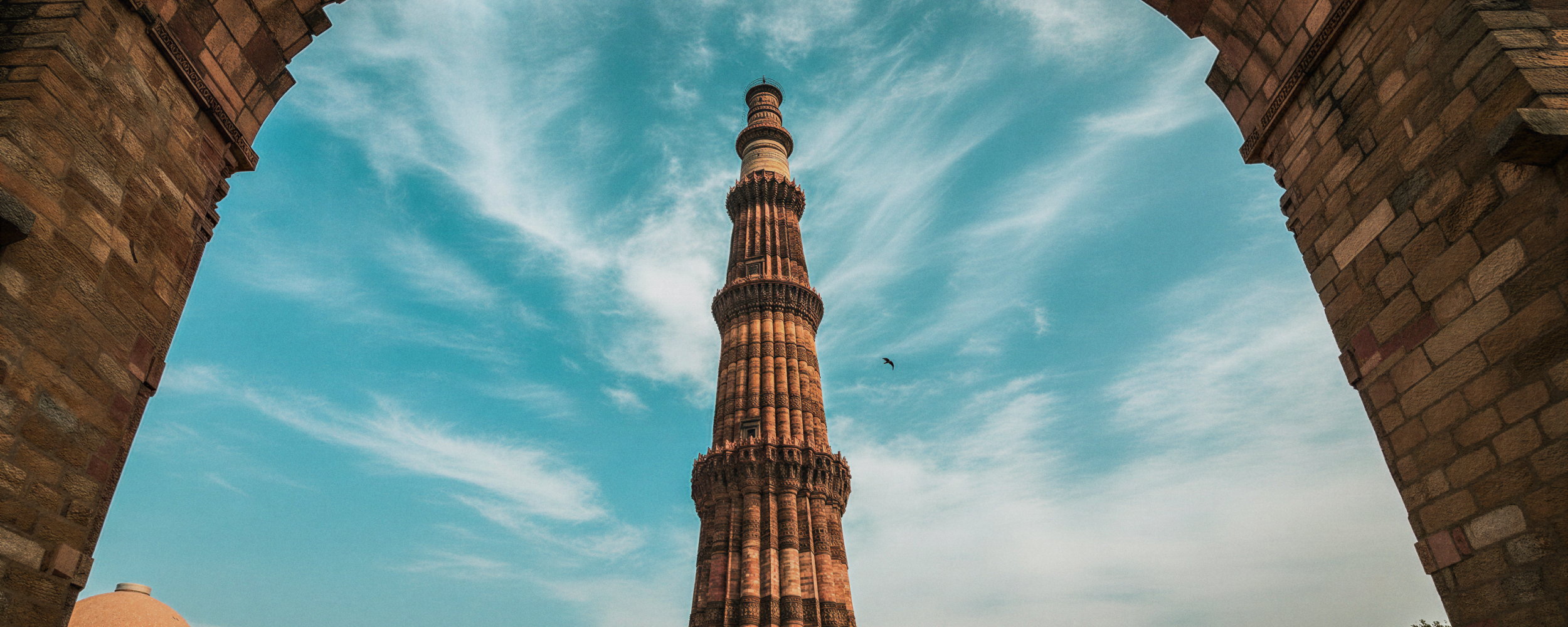
Qutub Minar in Mehrauli is the oldest of the UNESCO World Heritage Sites in Delhi and one of the tallest brick minarets in the world at 73 metres. Built in 1193, it marks the start of the Delhi Sultanate period. Detailed carvings and Quranic inscriptions spiral up the full height of the tower. Within the same complex, the Iron Pillar has resisted rust for centuries and continues to attract scientific attention. Furthermore, the ruins of the Quwwat-ul-Islam Mosque add further historical depth. Entry costs Rs 35 for Indian nationals and Rs 550 for foreign visitors. The complex opens daily from 7:00 AM to 5:00 PM. The nearest metro station is Qutub Minar Metro Station on the Yellow Line.
Humayun’s Tomb — The Monument That Inspired the Taj Mahal
Humayun’s Tomb in Nizamuddin East is the most graceful of the UNESCO World Heritage Sites in Delhi. Completed in 1570, it introduced the Persian-style garden tomb to the Indian subcontinent and directly influenced the design of the Taj Mahal nearly a century later. The red sandstone structure sits at the centre of symmetrical char bagh gardens. Early mornings are particularly rewarding — the lawns are quiet and the light is soft. Entry costs Rs 35 for Indian nationals and Rs 550 for foreign visitors. The site opens daily from sunrise to sunset. The nearest metro station is JLN Stadium Metro Station on the Violet Line, a short walk away.
Red Fort — The Heart of Mughal Imperial Power
Red Fort, or Lal Qila, in Old Delhi is the most symbolically significant of the UNESCO World Heritage Sites in Delhi. Emperor Shah Jahan built it in 1648, and it served as the Mughal capital for nearly two centuries. Inside the massive red sandstone walls, the Diwan-i-Aam and Diwan-i-Khas — halls for public and private audiences — convey the scale of imperial ceremony. The evening sound-and-light show runs daily except Mondays and costs Rs 60 to Rs 100. Entry to the fort costs Rs 35 for Indian nationals and Rs 550 for foreign visitors. The nearest metro station is Chandni Chowk Metro Station on the Yellow Line.
Jama Masjid — Old Delhi’s Defining Mosque
Jama Masjid, a short walk from Red Fort, is the largest mosque in India and one of the most architecturally impressive of the UNESCO World Heritage Sites in Delhi. Completed in 1656, it holds up to 25,000 worshippers in its vast courtyard. Climbing one of the minarets costs Rs 100 and provides sweeping views over Old Delhi‘s dense rooftop landscape — particularly rewarding in the early morning. Entry to the mosque is free, though a camera fee of Rs 300 applies for photography. Modest dress — covering shoulders and knees — is required for all visitors. The nearest metro station is Chawri Bazaar Metro Station on the Yellow Line.
Jantar Mantar — 18th-Century Astronomical Instruments
Jantar Mantar near Connaught Place is the most scientifically fascinating of the UNESCO World Heritage Sites in Delhi. Maharaja Jai Singh II built it in 1724 as a working astronomical observatory. The massive stone instruments — designed to measure time, predict eclipses, and track celestial movements — still function with surprising accuracy. Entry costs Rs 15 for Indian nationals and Rs 200 for foreign visitors. The site opens daily from 6:00 AM to 8:00 PM. Notably, it is the most compact of the UNESCO World Heritage Sites in Delhi and can be covered comfortably in one hour. The nearest metro station is Patel Chowk Metro Station on the Yellow Line.
Practical Tips for Visiting the UNESCO World Heritage Sites in Delhi
Most UNESCO World Heritage Sites in Delhi are closed on Mondays. Visit Humayun’s Tomb and Qutub Minar in the morning when the light is best and crowds are smallest. Red Fort and Jama Masjid suit late afternoon visits, as Old Delhi‘s food and market culture comes alive toward evening. Street food near the sites — chaat near Jama Masjid, parathas in Paranthe Wali Gali — costs Rs 50 to Rs 200 per item. For NRI visitors and international tourists working through these UNESCO World Heritage Sites in Delhi, Mony makes every payment effortless. Mony is a travel finance app that lets NRIs and tourists pay like locals using UPI — consequently, there are no foreign card fees and no declined payments at entry counters, auto-rickshaws, or food stalls throughout the route.






Leave a Reply