
Lucknow’s Timeless Charm: Must-See Historical Sites in Lucknow for International Travelers
Table of Contents
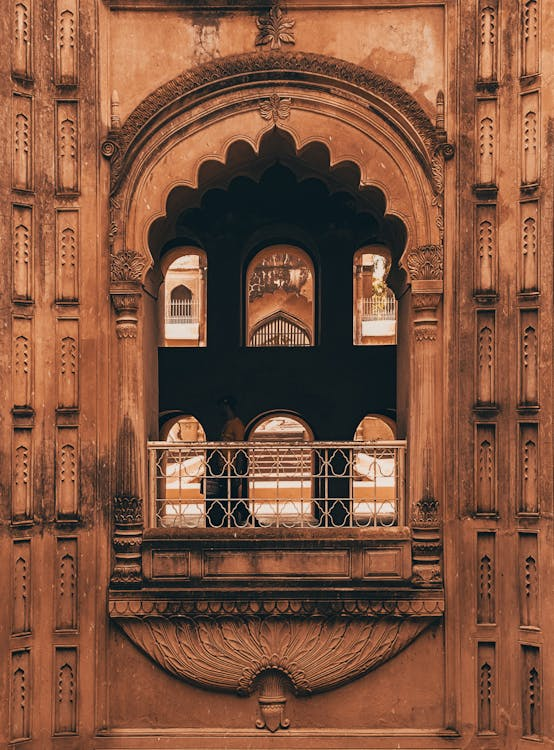
Lucknow carries its history more visibly than most Indian cities. The Nawabi era architecture — grand gateways, labyrinthine imambaras, picture galleries, and clock towers — fills the old city with structures that survive remarkably intact. The historical sites in Lucknow span several centuries and several distinct architectural traditions. Together, they make a compelling case for spending more than a single day in a city that most itineraries treat as a transit stop.
Rumi Darwaza — The Gateway That Defines the City
Nawab Asaf-ud-Daula built Rumi Darwaza in the 18th century, and it remains the most recognisable of all the historical sites in Lucknow. The gateway stands approximately 18 metres high and displays extraordinary Awadhi architecture — intricate floral ornamentation, arched tiers, and a scale designed to impress. At night, the monument is illuminated, and the effect is considerably more dramatic than the daytime view. Entry is free. The Bada Imambara stands directly adjacent.
Bada Imambara — Labyrinth and Mosque
Nawab Asaf-ud-Daula also built Bada Imambara in 1784, partly as a famine relief project that employed thousands of local workers. The central hall is one of the largest arched constructions in the world built without iron or wooden beams. The Bhool Bhulaiya, a labyrinthine network of corridors on the upper floors, is one of the most entertaining of the historical sites in Lucknow to navigate. The Asfi Mosque in the same complex is an active place of worship. Entry costs Rs 50 for Indian nationals and Rs 500 for foreign visitors. The complex opens daily from 6:00 AM to 5:00 PM.
Hussainabad Imambara — Chandeliers and Marble
Nawab Muhammad Ali Shah built Hussainabad Imambara in 1838. The central hall features European chandeliers, a marble cenotaph, and intricate decorative detail that reflects the eclectic tastes of the later Nawabi period. The surrounding complex includes a pool, a gatehouse, and several smaller structures. Entry combines with Bada Imambara in a single ticket priced at Rs 50 for Indian nationals and Rs 500 for foreign visitors.
Hussainabad Clock Tower — Victorian Gothic in Lucknow
At approximately 67 metres, Hussainabad Clock Tower is claimed to be the tallest clock tower in India. Builders completed it in 1887 to mark the visit of Sir George Couper, the Lieutenant-Governor of the United Provinces. It blends Victorian Gothic and local Awadhi elements in a way that characterises much of Lucknow’s 19th-century architecture. The exterior and its setting among the surrounding monuments are the primary reasons to visit. Entry to the surrounding area is free.
Hussainabad Picture Gallery — Royal Portraits
Hussainabad Picture Gallery sits within the Hussainabad complex and houses life-size portraits of the Nawabs of Awadh alongside historical photographs. The collection is modest in scale but rich in context. Furthermore, the building itself — with its arched verandas and Nawabi proportions — is worth the visit independently. Entry costs Rs 25 for Indian nationals and is included in the combined imambara ticket for foreign visitors.
Residency — Ruins of the 1857 Siege
The Residency is one of the most historically significant of the historical sites in Lucknow. British forces and civilians endured an 87-day siege here during the 1857 uprising. Authorities preserved the ruins in the condition the siege left them. Cannonball marks remain visible in the walls. The site also contains a cemetery and a small museum. Entry costs Rs 25 for Indian nationals and Rs 300 for foreign visitors. The Residency opens daily from 9:00 AM to 5:30 PM.
Chikankari Workshops — Craft as Living Heritage
Chikankari embroidery is Lucknow’s most celebrated craft tradition. Artisans work white thread onto fine cotton and muslin in patterns that require years of training to master. Several workshops near Chowk in the old city allow visitors to observe production and buy directly from makers. Prices range from Rs 300 for simple items to Rs 5,000 and above for more elaborate pieces. This is, consequently, one of the historical sites in Lucknow that connects the city’s past with living practice rather than preserved ruins.
Getting Around Lucknow’s Historical Sites
The main cluster of historical sites in Lucknow — Rumi Darwaza, both imambaras, the clock tower, and the picture gallery — sits in the Hussainabad area. Visitors can cover it on foot within a half-day. The Residency lies approximately 2 kilometres away and an auto-rickshaw covers that distance for Rs 40 to Rs 60. Lucknow Charbagh Railway Station connects the city to Delhi, Varanasi, and other major destinations. For NRI visitors and international tourists, Mony keeps payments seamless at every stop. Mony is a travel finance app that lets NRIs and tourists pay like locals using UPI. As a result, entry fees, auto fares, and Chikankari purchases all go through in a single tap — no foreign card fees and no cash-exchange complications.






Leave a Reply