
India is one of those places that genuinely defies a single description. It’s loud, quiet, ancient, chaotic, spiritual, and utterly beautiful — sometimes all at once, sometimes all within the same city block. With over 20 official languages, seven land borders, and more UNESCO World Heritage Sites than most people realise, it rewards travellers who take the time to explore beyond the obvious. Whether you’re a first-timer building an itinerary or a repeat visitor filling in the gaps, this guide covers the must visit places in India that deserve a spot on every travel list.
1. Udaipur, Rajasthan
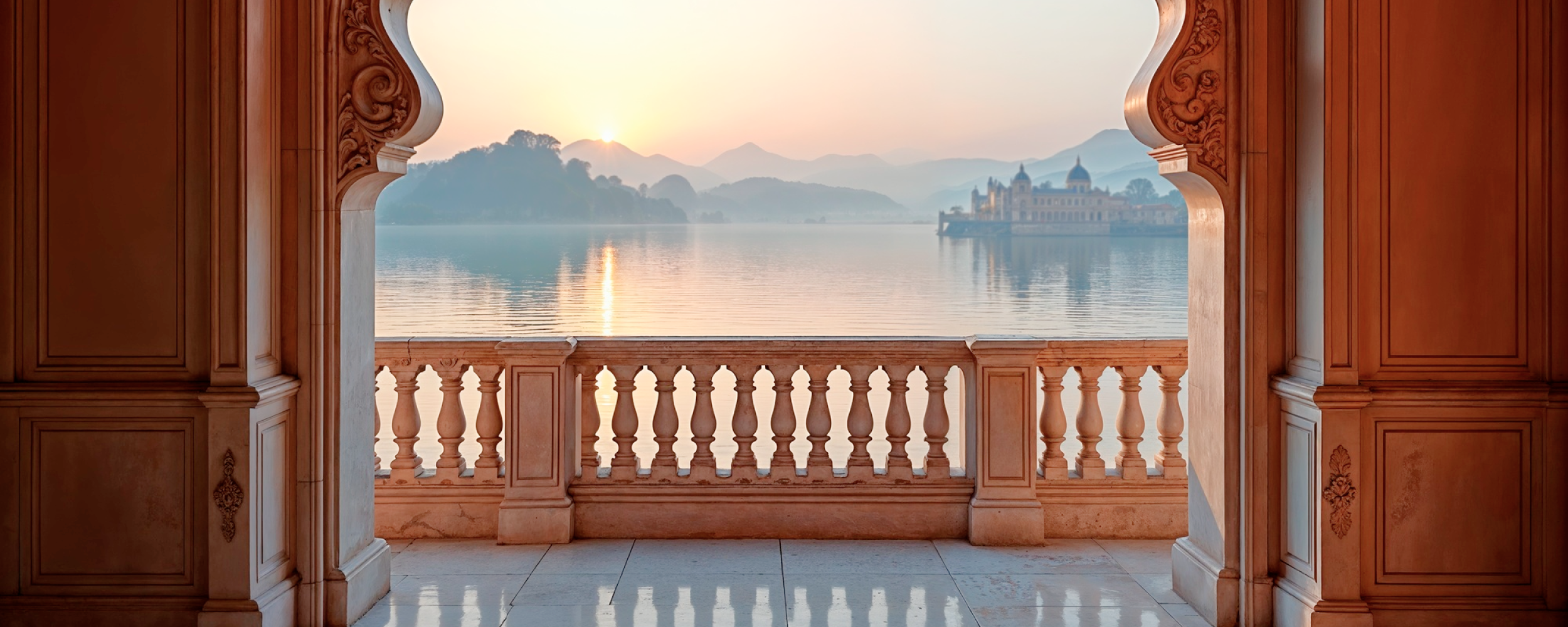
Few cities in India feel as cinematic as Udaipur. Nestled among the Aravalli Hills and built around a network of shimmering lakes, locals and visitors alike call it the “City of Lakes” — and the nickname is well earned. The star attraction is the Lake Palace, a white marble structure that appears to float in the middle of Lake Pichola. You can’t stay there without a booking at the Taj hotel that now occupies it, but the views from the ghats cost nothing.
Beyond the lake, the City Palace is the real highlight for most visitors — a sprawling complex of courtyards, towers, and museums that the Mewar dynasty built over centuries. After that, wander the winding old city lanes and duck into the ancient bazaars for a feel of everyday Udaipur.
Entry fees & timings
- City Palace: ₹300 for Indian nationals, ₹700 for foreign tourists | Open daily 9:30am–5:30pm
- Monsoon Palace: ₹80 entry + ₹200 for vehicle | Open daily 9am–6pm
Getting around
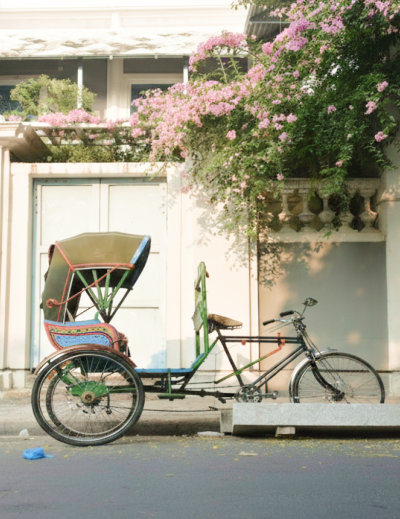
Udaipur has no metro. Auto-rickshaws work best for getting around the old city (₹50–₹100 for short trips). Tuk-tuk apps like Rapido are also available.
Food stop
For a proper sit-down meal, try the thali at Natraj Dining Hall near the City Palace — unlimited Rajasthani thali for around ₹250–₹350.
2. Amritsar, Punjab
Amritsar sits close to the Pakistan border and holds one of the most emotionally powerful places in all of South Asia — the Golden Temple (Harmandir Sahib). This Sikh shrine stays open 24 hours a day, seven days a week, and welcomes visitors of all faiths at no charge. The golden structure reflects off the surrounding Amrit Sarovar (Pool of Nectar) at every hour, but it’s particularly striking at dusk or dawn. Remember to cover your head (the temple provides cloth) and remove your shoes before entering.
Beyond the temple itself, the langar — the communal kitchen that feeds over 100,000 people daily, entirely free — stands as one of the most humbling experiences India offers. You can volunteer for an hour or simply sit down and eat alongside pilgrims and tourists from around the world.
Moreover, the streets around the temple buzz with energy. Shops sell phulkari embroidery, juttis (embroidered leather shoes), and Punjabi pickles and spices — so set aside time to explore before you leave.
Entry fees & timings
- Golden Temple: Free, open 24 hours
- Jallianwala Bagh: Free | Open daily 6:30am–7:30pm (seasonal variation)
Getting around
Trains connect Amritsar well to Delhi — the Shatabdi Express takes about 6 hours and starts from ₹700. Once in the city, the centre is compact and walkable.
Food stop
Kesar Da Dhaba is an Amritsar institution — dal makhani and stuffed parathas for under ₹200 per person.
3. Ladakh
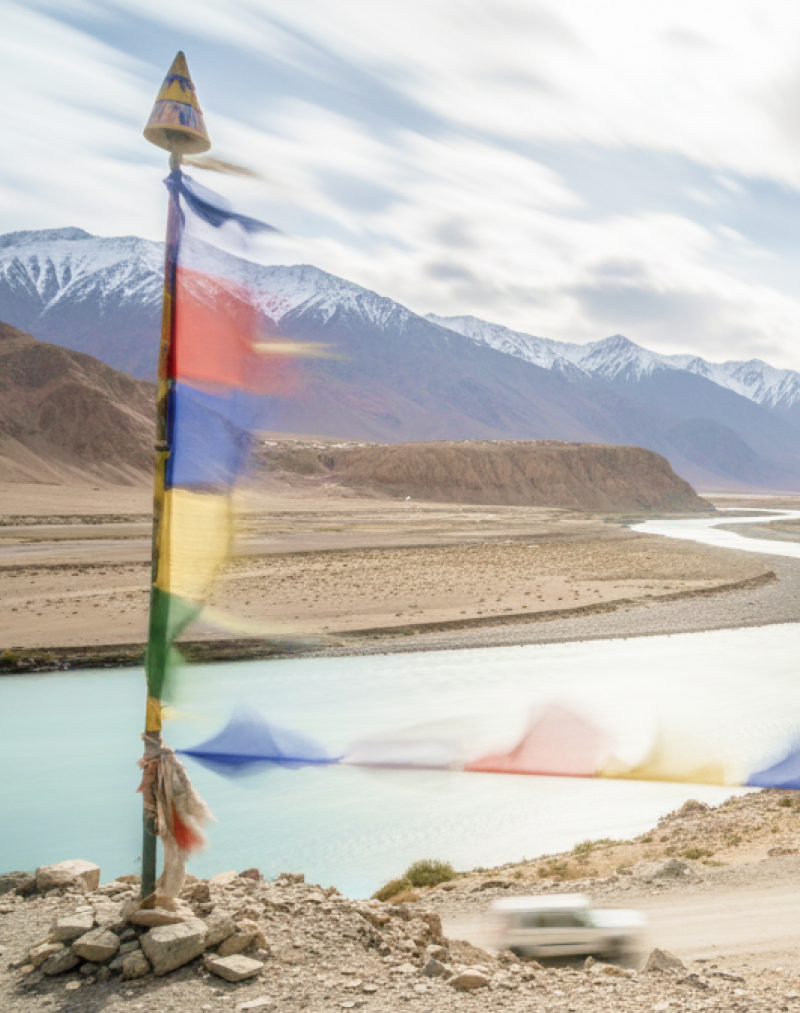
Ladakh is unlike anywhere else in India. High-altitude desert, snow-capped peaks, turquoise rivers, and monasteries perched on cliffsides — it draws trekkers, motorcyclists, and Buddhist pilgrims in roughly equal numbers. Because the region sits at an average elevation of 3,500 metres, you should give yourself 2–3 days on arrival in Leh to acclimatise before doing anything strenuous. Altitude sickness is common and genuinely not to be underestimated.
Once you’re settled, the Leh Palace, built in the 17th century, towers over the old town and gives panoramic views of the valley. Just 19km away, the Thiksey Monastery draws frequent comparisons to Potala Palace in Lhasa — and it earns every one of them.
Entry fees & timings
- Leh Palace: ₹15 for Indians, ₹100 for foreigners | Open daily 7am–6pm
- Thiksey Monastery: Free entry, small donation expected
- Inner Line Permit required for certain areas near borders — pick it up at the DC office in Leh (₹20 per day)
Getting there
Fly into Leh’s Kushok Bakula Rimpochee Airport — flights from Delhi take about 1.5 hours. Alternatively, the Manali–Leh highway opens from June to October only.
Food stop
Bon Appétit in Leh serves excellent thukpa (Tibetan noodle soup) and momos for around ₹150–₹250.
4. Goa
Goa has a personality that doesn’t quite fit the rest of India — and that’s precisely what makes it interesting. Four hundred years of Portuguese rule left behind whitewashed churches, Latin-influenced cuisine, and a laid-back coastal culture that blends seamlessly with Indian traditions. The beach scene draws most visitors, but Goa has a lot more going on beneath the surface.
Candolim Beach is lively and well-developed, with beach shacks and sunloungers available for ₹200–₹500 per day (often waived with a food order). In contrast, Palolem Beach in South Goa offers a crescent-shaped bay framed by headlands and backed by a quiet village — far more relaxed, and arguably more beautiful. Meanwhile, Anjuna strikes a good middle ground, with the added bonus of a short walk up to the crumbling Chapora Fort for sweeping views of the coastline.
Entry fees & timings
- Chapora Fort: Free | Open daily sunrise to sunset
- Basilica of Bom Jesus: Free | Monday–Saturday 9am–6:30pm, Sunday 10:30am–6:30pm
- Beach shack sunloungers: ₹200–₹500/day
Getting around
Goa has no metro. Renting a scooter (₹300–₹500/day) or a motorbike is the most practical way to move between beaches. Taxis are plentiful, but always agree on a fixed fare upfront.
Food stop
Fisherman’s Wharf in South Goa serves excellent prawn curry and rice for around ₹350–₹500 per person.
5. Delhi
Delhi is enormous, contradictory, and endlessly fascinating. It’s a city where 17th-century Mughal monuments share streets with colonial-era bungalows, modern glass towers, and ancient temples. Furthermore, it’s one of India’s best-connected transport hubs, making it a natural starting or ending point for any northern India itinerary.
Start with the Red Fort (Lal Qila) — a sandstone fortress that Emperor Shah Jahan built in 1638. Inside, you can walk through the Lahori Gate, explore the Bazaar, and visit the former royal residences. Pay for the audio guide (₹100) to get the most out of the complex.
From there, head to the Jama Masjid — just a short walk away — one of the largest mosques in India and worth visiting for the atmosphere alone. Afterwards, lose yourself in Chandni Chowk: narrow lanes packed with spice traders, sweet shops, textile dealers, and street food vendors.
Entry fees & timings
- Red Fort: ₹35 for Indians, ₹500 for foreigners | Tuesday–Sunday, 9:30am–4:30pm (closed Mondays)
- Humayun’s Tomb: ₹40 for Indians, ₹600 for foreigners | Open daily 6am–6pm
- Qutub Minar: ₹40 for Indians, ₹600 for foreigners | Open daily 7am–5pm
Getting around
Delhi runs an excellent metro network that covers most major sights. A Tourist Card (₹200 for 1 day, ₹500 for 3 days) gives unlimited rides and is the most convenient option for visitors.
Food stop
For street food, head to Paranthe Wali Gali in Chandni Chowk — fried stuffed parathas with pickle and curd for ₹100–₹150 per plate.
6. Ellora and Ajanta Caves, Maharashtra
These two cave complexes rank among the most extraordinary archaeological sites in the world — and because more famous landmarks tend to overshadow them, you’ll likely have room to breathe when you visit.
Ellora features 34 caves that craftsmen cut directly into a basalt cliff over roughly 600 years, representing Buddhist, Hindu, and Jain traditions side by side. The scale of some shrines is genuinely hard to process — especially the Kailasa Temple (Cave 16), a single-rock structure larger than the Parthenon. Plan at least half a day here.
Ajanta, about 100km away (around 2 hours by road), holds 29 caves covered in painted murals that artists created as far back as the 2nd century BCE. Scholars widely regard these as the finest surviving examples of ancient Indian Buddhist art. Though the two sites sit two hours apart, visiting both is absolutely worth it.
Entry fees & timings
- Ellora Caves: ₹40 for Indians, ₹600 for foreigners | Open Tuesday–Sunday, 6am–6pm (closed Mondays; Kailasa Temple open all days)
- Ajanta Caves: ₹40 for Indians, ₹600 for foreigners | Open Tuesday–Sunday, 9am–5:30pm
Getting there
Both sites are accessible from Aurangabad (now called Chhatrapati Sambhajinagar), which has a domestic airport and rail connections from Mumbai (about 7 hours by train). Hire a car or join a day tour from the city.
Food stop
Pack snacks for Ajanta as options are limited on-site. At Ellora, the MTDC restaurant near the entrance serves decent thalis for ₹200–₹300.
7. Varanasi, Uttar Pradesh
Varanasi is one of the oldest living cities in the world, and it shows. Hindus believe that dying here grants moksha — liberation from the cycle of rebirth — so the city holds life and death in plain view in a way that can genuinely unsettle first-time visitors.
The ghats along the Ganges River are where the city’s spiritual life plays out most visibly. Pilgrims bathe in the river at dawn, and priests perform elaborate aarti (fire offerings) at dusk at Dashashwamedh Ghat. Meanwhile, the Manikarnika and Harishchandra cremation ghats burn around the clock. Leave the camera away at cremation sites — it’s a matter of basic respect.
Beyond the ghats, take a sunrise boat ride on the Ganges (₹200–₹500 depending on how well you negotiate). It’s one of the most memorable things you can do in India.
Entry fees & timings
- Kashi Vishwanath Temple: Free entry (carry ID; rules for non-Hindus vary, so check locally) | Open daily, multiple darshan timings
- Sarnath (nearby Buddhist site): ₹20 for Indians, ₹300 for foreigners | Open daily 9am–5:30pm
Getting around
Trains connect Varanasi Cantt station directly to Delhi, Agra, and Kolkata. Inside the city, autos and e-rickshaws handle the main roads, while much of the ghats area stays pedestrian-only.
Food stop
Kashi Chat Bhandar near Godaulia dishes up tamatar chaat and dahi vadas for ₹50–₹100 per plate. Cash only.
8. Kerala
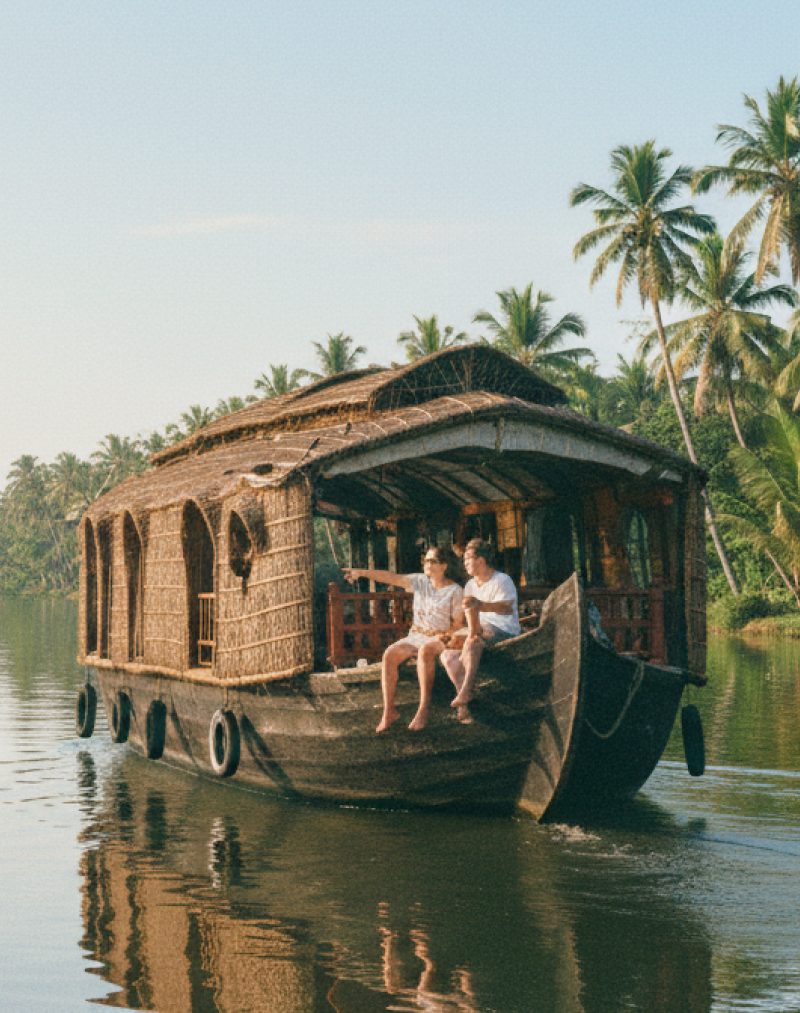
Kerala feels like a different India entirely — lush, tropical, and comparatively unhurried. The state stretches along India’s southwestern tip, with beaches on one side, the Western Ghats on the other, and a network of backwaters threading through the middle. A houseboat stay around Alleppey (Alappuzha) is a genuine highlight — overnight rice barge hire runs from ₹7,000–₹15,000 depending on size and season.
Kochi (Cochin) makes the ideal base — a fascinating mix of fishing villages, colonial architecture, and contemporary art galleries. At Fort Kochi, the Chinese Fishing Nets look best at sunset, and the nearby Mattancherry Palace houses some of the finest murals in Kerala at just ₹10 for Indians and ₹25 for foreigners.
Additionally, wildlife enthusiasts should head to Periyar National Park for lake boat safaris — elephants and deer regularly appear at the water’s edge.
Entry fees & timings
- Periyar National Park boat safari: ₹300–₹450 per person | Timings vary by season
- Mattancherry Palace: ₹10 for Indians, ₹25 for foreigners | Saturday–Thursday 10am–5pm
Getting around
Fly into Kochi International Airport to start. Kerala has no metro outside Kochi, where the Kochi Metro runs efficiently. For the backwaters, KSRTC ferries are cheap and scenic. AC sleeper trains link Kochi to Thiruvananthapuram and Kozhikode.
Food stop
The Kerala sadya — a multi-dish vegetarian feast on a banana leaf — is non-negotiable. Try it at Dhe Puttu in Kochi for around ₹200–₹350.
9. Agra, Uttar Pradesh
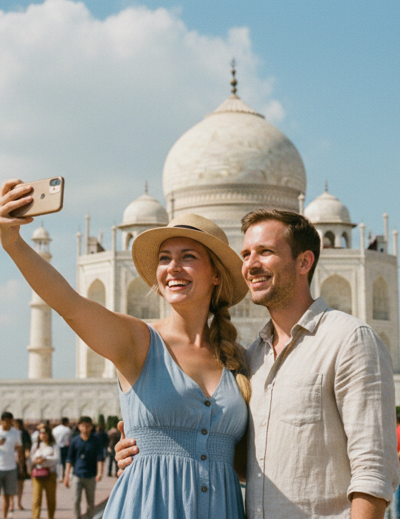
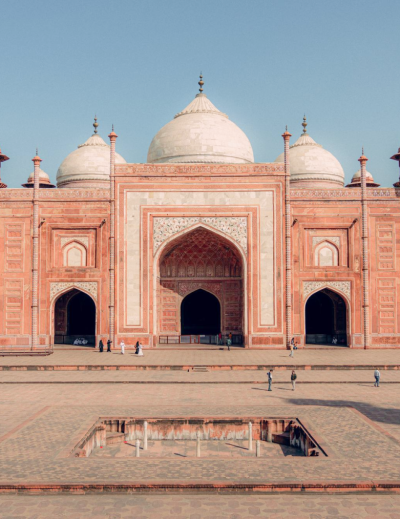
Let’s be straightforward about Agra: most people come for the Taj Mahal and not a lot else. That’s entirely fair, because the Taj is genuinely one of the most extraordinary things ever built. Emperor Shah Jahan commissioned the white marble mausoleum in memory of his wife Mumtaz Mahal, and it changes character across the day. Crowds are thinnest at opening time, so sunrise visits are popular for good reason.
That said, the Agra Fort deserves more credit than it typically gets. It’s a substantial Mughal fortification with a remarkable story — Shah Jahan’s own son later imprisoned him here, and the emperor spent his final years gazing at the Taj from a window in the fort.
Entry fees & timings
- Taj Mahal: ₹200 for Indians, ₹1,300 for foreigners (includes ₹200 monument fee) | Open Saturday–Thursday, 6am–6:30pm (closed Fridays). Full moon night visits also available — book in advance
- Agra Fort: ₹50 for Indians, ₹650 for foreigners | Open daily 6am–6pm
Getting there
The Gatimaan Express from Delhi (1h 40min, from ₹750) and the Shatabdi Express are the fastest train options. Note that the Taj Mahal area restricts vehicle access — electric vehicles and cycle rickshaws operate in the zone, and your driver will drop you at the designated parking area.
Food stop
Sheroes Hangout near the Taj runs on a pay-what-you-can model and employs acid attack survivors. Good coffee and snacks, and well worth supporting.
10. Jaipur, Rajasthan
Jaipur is the capital of Rajasthan and the third corner of the Golden Triangle (after Delhi and Agra), though it earns its place on merit rather than geography. The old city sits inside pink-painted walls, with bazaars selling gemstones, blue pottery, silk, and spices at every turn. The “Pink City” nickname came about in 1876, when the city painted its buildings to welcome the Prince of Wales.
Just 11km outside the city, the Amber Fort (or Amer Fort) is the main draw — a palace-fortress that rises dramatically from the hillside above a lake. It’s genuinely large and ornate, so arrive early to beat both the crowds and the heat.
Back in the city, the Hawa Mahal (Palace of Winds) is more photogenic from the outside than within, but the upper-floor views over the bazaar justify the small entry fee. Meanwhile, the City Palace complex — still partly home to the royal family — houses an excellent museum.
Entry fees & timings
- Amber Fort: ₹100 for Indians, ₹500 for foreigners | Open daily 8am–5:30pm (light and sound show in evenings)
- Hawa Mahal: ₹50 for Indians, ₹200 for foreigners | Open daily 9am–5pm
- City Palace Museum: ₹200 for Indians, ₹700 for foreigners | Open daily 9:30am–5pm
Getting around
Jaipur’s metro line (₹9–₹45 per trip) connects the railway station to key areas of the city. Autos cover the rest. Note that the Jaipur Metro Phase 2 expansion is ongoing, so check routes locally before you travel.
Food stop
LMB (Laxmi Misthan Bhandar) in Johari Bazaar has been a Jaipur institution for decades — try the ghevar and mawa kachori. Around ₹200–₹400 for a solid selection.
Practical tips for visiting India
Best time to visit
October to March suits most of India well. However, Rajasthan and the north get brutally hot from April to June, so avoid those months if you can. Kerala and Goa are at their best between November and February, while Ladakh only opens up from June to September.
Visa
Most nationalities can apply for an India e-Visa online at evisa.india.gov.in — options include 30-day, 90-day, and 5-year visas. The process takes around 72 hours and costs $25–$80 depending on your nationality.
Getting around India
The Indian Railways network is one of the largest in the world and the most practical way to cover long distances. Book well in advance through IRCTC (irctc.co.in) — premium trains like Vande Bharat and Shatabdi sell out fast. For longer journeys, domestic flights on IndiGo and Air India are affordable and save significant time.
Money
India is still largely cash-dependent outside major tourist areas. ATMs are widespread in cities, and UPI payment apps now work almost everywhere — some restaurants and shops actively prefer digital payments. If you want to manage your travel budget easily on the go, Mony is worth downloading before you leave. It lets you top up your account and make quick, secure payments whether you’re settling a restaurant bill in Varanasi or booking a houseboat in Kerala, without fumbling for cash or worrying about currency conversion.
Safety
India is generally safe for tourists. Nevertheless, take the usual precautions — agree on taxi fares before getting in (or use Ola/Uber), go easy on street food until your stomach adjusts, and carry a photocopy of your passport at all times.
Leave a Reply