
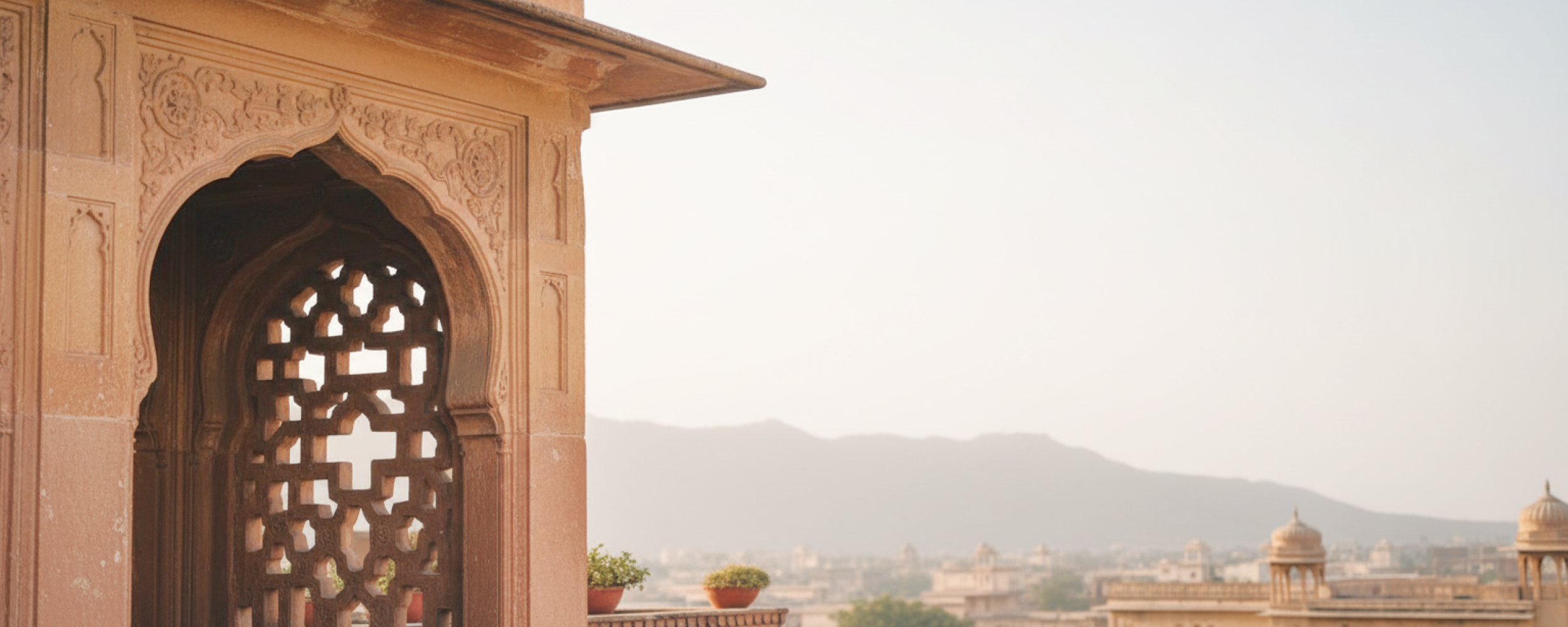
Where History Lives: A Royal Architecture Tour in Jaipur
In Jaipur, history does not sit in museums — it lives in stone, marble, and mirror. Every archway, dome, and jharokha reflects centuries of Rajput craftsmanship, Mughal influence, and royal ambition. A jaipur architecture tour covers the most significant surviving examples of this built heritage, from the city’s founding in 1727 to the British-era structures that added another layer to the mix. This guide covers the essential stops in order, with practical information for each.
City Palace — Where Royals Still Reside
City Palace is the natural starting point for any jaipur architecture tour. The complex blends Rajput, Mughal, and European elements across a series of courtyards, museums, and ceremonial halls. Notably, a section of the palace is still the residence of Jaipur’s royal family, which gives it a living quality that purely historical sites lack. The Peacock Gate and Chandra Mahal Courtyard are the most photographed elements. Entry costs Rs 200 for the standard ticket and up to Rs 3,000 for premium access including the Chandra Mahal. The palace opens daily from 9:30 AM to 5:00 PM. Allow 90 minutes to two hours for a proper visit.
Amber Fort — The Crown Jewel
Amber Fort sits 11 kilometres from the city centre on a hillside above Maota Lake. Built primarily from red sandstone and white marble, its construction began in the late 16th century and successive rulers added to it across the following 150 years. The result is a layered complex of frescoed halls, mirror mosaic chambers, royal apartments, and panoramic terraces. The Sheesh Mahal — a room whose ceiling and walls are covered entirely in mirror work — is the architectural highlight and consequently draws the largest crowds. Entry costs Rs 100 for Indian nationals and Rs 550 for foreign visitors. The fort opens daily from 8:00 AM to 5:30 PM. Arrive early to have the inner courtyards largely to yourself.
Hawa Mahal — The Palace of Winds
Hawa Mahal is Jaipur’s most recognisable facade — a five-storey pink sandstone screen of 953 latticed windows designed in 1799 to allow royal women to observe street life without being seen. It is, in short, a masterpiece of functional architecture dressed as pure decoration. Entry costs Rs 50 for Indian nationals and Rs 200 for foreign visitors. The monument opens daily from 9:00 AM to 4:30 PM. The best exterior photographs come from the rooftop cafes directly across the street, particularly in the late afternoon when the light catches the pink sandstone at its warmest.
Nahargarh Fort — Sunset and Secret Corridors
Nahargarh Fort sits in the Aravalli Hills above the city and offers the most expansive views of Jaipur available from any accessible point. Unlike Amber Fort, it attracts fewer visitors, which makes exploration considerably more relaxed. The Madhavendra Palace inside the fort is architecturally remarkable — nine identical suites, one for each of Maharaja Sawai Madho Singh’s queens, connected by a system of corridors that allowed private communication while maintaining each queen’s independence. Entry costs Rs 50 for Indian nationals and Rs 200 for foreign visitors. The fort opens daily from 10:00 AM to 5:30 PM. Sunset visits, moreover, reward with both the quality of light and the coolest temperatures of the day.
Jal Mahal — A Palace on the Lake
Jal Mahal on Mansagar Lake is not accessible to visitors — entry to the island is not permitted. However, the lakeside view of a five-storey Mughal and Rajput palace appearing to float in the middle of the water is one of the most photographed scenes in Rajasthan. The best light for photographs is at sunrise, when mist sometimes sits on the lake surface. After dark, the palace is lit and reflects in the water. Stop for 10 minutes on the way between Amber Fort and the city — no entry fee and no time commitment required.
Albert Hall Museum — Indo-Saracenic at Its Finest
Albert Hall Museum in Ram Niwas Garden is the best example of Indo-Saracenic architecture in Jaipur. Designed by Sir Samuel Swinton Jacob and completed in 1887, it combines Mughal arches, Hindu temple elements, and Victorian Gothic detail into a building that is as interesting to look at from the outside as it is to explore inside. The collection covers Egyptian mummies, decorative arts, natural history, and Rajasthani textiles and paintings. Entry costs Rs 40 for Indian nationals and Rs 300 for foreign visitors. The museum opens daily from 9:00 AM to 5:00 PM and again from 7:00 PM to 10:00 PM for the evening when the building is illuminated. The night visit is, consequently, one of the most distinctive experiences on a jaipur architecture tour.
Practical Tips for the Jaipur Architecture Tour
Start at City Palace when it opens at 9:30 AM, then drive to Amber Fort before the mid-morning crowds peak. Return through Jal Mahal on the way back and finish with Hawa Mahal in the late afternoon light. Nahargarh and Albert Hall suit an evening visit. Wear comfortable shoes throughout — the fort complexes involve significant walking on uneven surfaces. For NRI visitors and international tourists, Mony keeps entry fee payments and food stop transactions effortless. Mony is a travel finance app that lets NRIs and tourists pay like locals using UPI — no foreign card fees and no declined payments at smaller vendors throughout this jaipur architecture tour route.




Leave a Reply