
Discover Delhi’s UNESCO World Heritage Sites: A Journey Through History
Delhi doesn’t reveal itself easily. Scratch the surface, however, and you’ll find layers of history stacked on top of each other. Mughal grandeur sits beside sultanate ambition. Meanwhile, colonial echoes linger around every corner. At the heart of it all are the Delhi UNESCO heritage sites — three monuments recognised by UNESCO for their outstanding universal value. They are, above all, worth every bit of the hype.
Whether you’re a first-time visitor or a seasoned history buff, this guide covers everything you need. You’ll find entry fees, transport tips, food stops, and practical timing advice — all in one place. So read on before you pack your walking shoes.
Qutub Minar and Its Monuments
What to Expect
Qutub Minar stands at a commanding 73 metres. It is, in fact, the tallest brick minaret in the world. Built in stages between 1193 and 1220, the tower is wrapped in intricate carvings and Quranic inscriptions. These, indeed, reward a slow and close look.
The surrounding Qutub Complex is the real gem, though. Within the same grounds, you’ll first find the Quwwat-ul-Islam Mosque — one of the oldest mosques in India. You’ll also come across the ornate Alai Darwaza and the unfinished Alai Minar. Then there’s the mysterious Iron Pillar — a 4th-century metallurgical marvel that has resisted rust for over 1,600 years. Even today, no one is completely sure how.
Notably, the atmosphere here is more relaxed than you might expect. Locals picnic on the lawns, while students sketch the architecture. Furthermore, the scale of the complex means it rarely feels overcrowded, even on busy days.
Practical Information
- Entry Fee: ₹35 for Indian nationals | ₹550 for foreign nationals | Free for children under 15
- Timings: Sunrise to sunset, every day
- Best Time to Visit: Early morning (7–9 AM) — cooler temperatures and soft light on the sandstone
- How to Get There: Take the Qutub Minar Metro Station on the Yellow Line. The complex is then a 10-minute walk from the exit, or a short auto-rickshaw ride.
- Time Needed: 1.5 to 2 hours
Food Nearby
After your visit, head to Lodi – The Garden Restaurant for a relaxed lunch. It’s about 3 km away, and mains start around ₹400–₹700. Alternatively, the street stalls along Aurobindo Marg serve excellent chole bhature for under ₹80.
Humayun’s Tomb
What to Expect
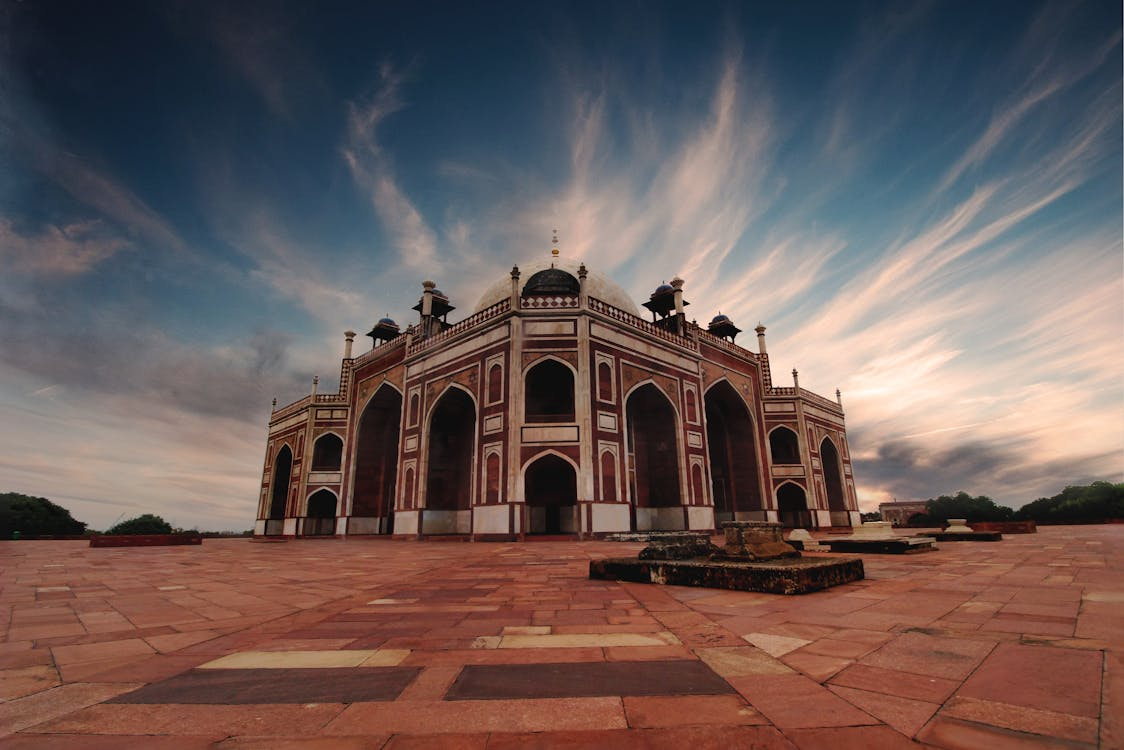
If you’ve ever wondered what inspired the Taj Mahal, come here first. Humayun’s Tomb was built in 1570 by the Mughal emperor’s widow and is widely considered the first mature example of Mughal architecture in India. The double dome, the red sandstone, the white marble, the precise symmetry — it’s all here, decades before Agra. In other words, this is where the blueprint was written.
The gardens alone are, moreover, worth the visit. They are laid out in the Persian charbagh (four-quadrant) style, with water channels dividing the space. As a result, they create a sense of calm that is hard to find elsewhere in the city. The complex also houses several smaller tombs of other Mughal royals. Most visitors, unfortunately, walk past them without realising their significance.
Practical Information
- Entry Fee: ₹35 for Indian nationals | ₹550 for foreign nationals | Free for children under 15
- Timings: Sunrise to sunset, daily
- Best Time to Visit: Late afternoon — crowds thin out after 4 PM, and the light on the marble is beautiful
- How to Get There: The nearest metro is JLN Stadium Metro Station on the Violet Line, about 1.5 km from the tomb. Autos are, consequently, easy to find at the exit.
- Time Needed: 1.5 to 2 hours
Food Nearby
The Nizamuddin area sits right next to the tomb and is one of Delhi’s most atmospheric neighbourhoods. For instance, street vendors near the Hazrat Nizamuddin Dargah sell nihari and seekh kebab rolls for ₹60–₹120. It’s chaotic, yet it smells absolutely amazing. In short, it feels deeply, genuinely Delhi.
Red Fort (Lal Qila)
What to Expect
The Red Fort is where modern India was born — at least symbolically. Prime Minister Nehru addressed the nation from these walls on Independence Day in 1947, and every Indian Prime Minister has followed that tradition since. Before that, however, it served as the seat of Mughal power for nearly 200 years. Emperor Shah Jahan built it in 1648.
The fort is massive — roughly 2 km in perimeter. There is, therefore, a lot to take in. First, the Diwan-i-Aam (Hall of Public Audience) gives you a sense of imperial scale. Next, the Diwan-i-Khas (Hall of Private Audience) is where the real power was concentrated. The Rang Mahal is equally worth your time. Several museums dot the interior as well, and they house Mughal-era artefacts that are worth at least 45 minutes on their own.
Above all, don’t miss the evening Sound and Light Show. It runs most evenings and narrates the fort’s history in both Hindi and English. It’s genuinely well done and, additionally, adds useful context to everything you saw during the day.
- Sound & Light Show Timings: 7:30 PM (Hindi) | 9:00 PM (English) — check locally for seasonal changes
- Show Ticket: ₹60 per person
Practical Information
- Entry Fee: ₹35 for Indian nationals | ₹550 for foreign nationals | Free for children under 15
- Timings: Tuesday to Sunday, 9:30 AM – 4:30 PM (closed on Mondays)
- Best Time to Visit: Weekday mornings — weekends tend to get very busy
- How to Get There: Chandni Chowk Metro Station on the Yellow Line. The fort’s main Lahori Gate is then a 10-minute walk through the bazaar.
- Time Needed: 2 to 3 hours
Food Nearby
You’re right next to Chandni Chowk — arguably the best street food destination in India. Specifically, don’t leave without trying these:
- Paranthe Wali Gali — stuffed parathas for ₹60–₹120
- Old Famous Jalebi Wala — ₹40 for the crispiest jalebis you’ll ever eat
- Natraj Dahi Bhalle at Chandni Chowk Road — ₹80 a plate, and absolutely worth it
Paying Your Way: Where MONY Makes Things Easier
Here’s one practical tip worth knowing before you go. Cashless payments aren’t always smooth at souvenir stalls, smaller eateries, or some ticket counters. That’s where MONY comes in handy. Its UPI interface lets you pay for entry tickets, snacks, or souvenirs without fumbling for exact change. As a result, you won’t need to carry large amounts of cash either. Since you’ll cover a lot of ground visiting Delhi’s UNESCO heritage sites in a single day, a frictionless payment option genuinely reduces stress. It keeps your focus where it belongs — on the history around you.
Planning Your Route: A Practical One-Day Itinerary
If you want to cover all three Delhi UNESCO heritage sites in one day, here’s a route that works well. First, start early to make the most of the cooler morning temperatures.
- 8:00 AM — Start at Qutub Minar (cooler temperatures, better light, fewer people)
- 10:30 AM — Next, head to Humayun’s Tomb via metro or cab (~30 mins)
- 1:00 PM — Then, break for lunch in Nizamuddin
- 2:30 PM — After that, make your way to Red Fort
- 7:30 PM — Finally, catch the Evening Sound and Light Show, then dinner in Chandni Chowk
In total, expect to spend around ₹800–₹1,500 per person. The final number, of course, depends on your food and transport choices.
Final Thoughts
Delhi’s UNESCO heritage sites are not just photo opportunities. They are, instead, genuinely moving places — if you give them the time they deserve. The Iron Pillar still puzzles scientists. Humayun’s Tomb, meanwhile, quietly taught the world how to build the Taj Mahal. The Red Fort, above all, is where a nation announced its freedom.
Each site carries a weight that is hard to describe until you’re standing in front of it. So go slowly. Read the plaques. Sit in the gardens. The history will, ultimately, find you.







Leave a Reply